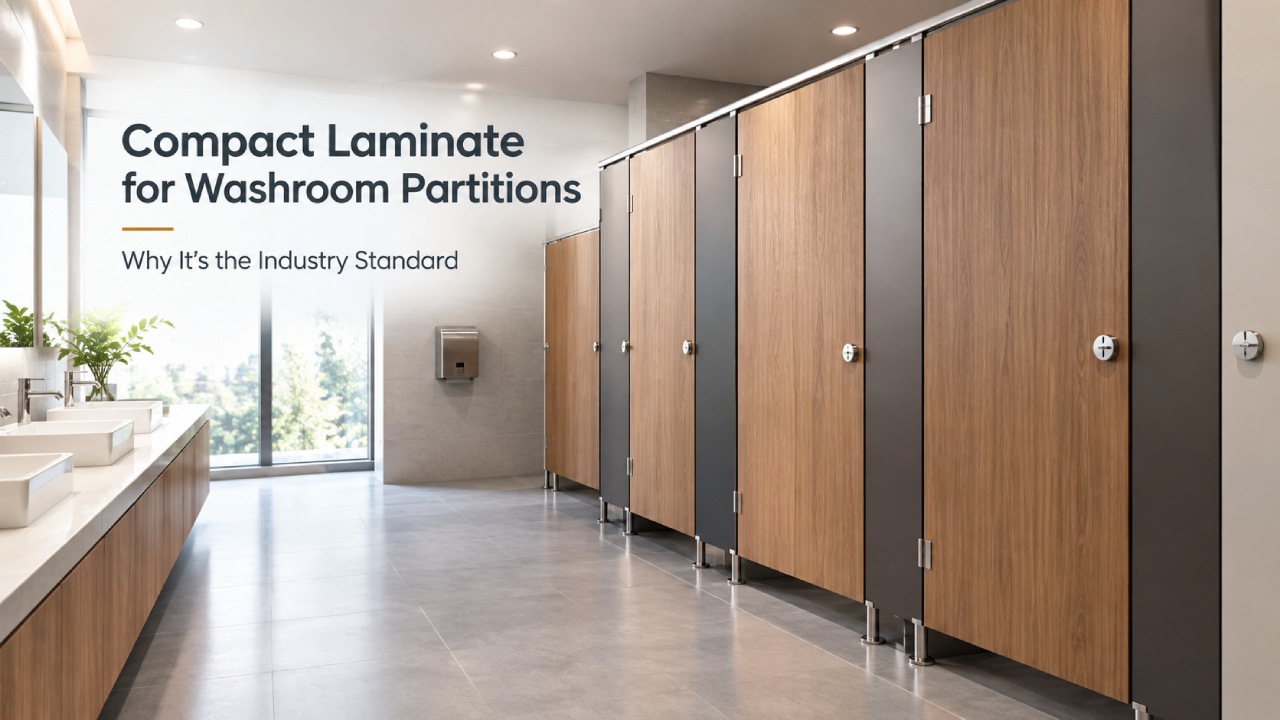
Walk into almost any modern office, mall, airport, gym, or school built in the last decade, and the washroom cubicles are very likely made from the same material: compact laminate. It's become such a default choice in commercial and institutional restrooms that architects rarely stop to question it — but the reasons behind that dominance are worth understanding, especially if you're still specifying plywood, MDF, or metal partitions out of habit.
This post breaks down exactly why compact laminate for washroom partitions has become the industry standard, what makes it outperform older materials, and how to choose the right grade for your project.
The Problem with Older Partition Materials
Before compact laminate became widely available, washroom partitions were typically built from:
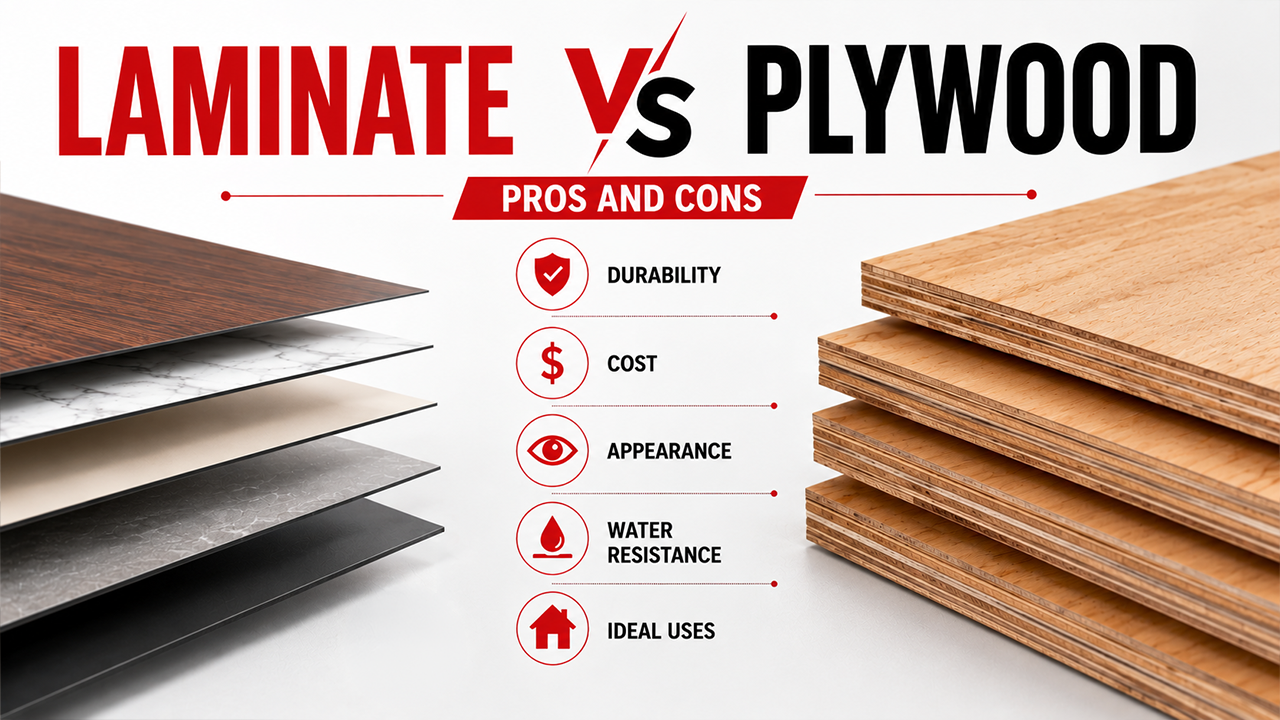
- Plywood — prone to swelling, delamination, and rot when exposed to constant moisture
- MDF (with laminate facing) — the core still absorbs moisture at cut edges and joints, leading to premature failure
- Powder-coated metal — durable against moisture but prone to rust at seams, dents from impact, and a colder, less design-flexible aesthetic
Washrooms are, by definition, one of the most punishing environments in any building: constant humidity, standing water, frequent cleaning with harsh chemicals, and heavy daily foot traffic. Materials that perform fine in a dry office corridor often fail within a few years in this setting.
What Makes Compact Laminate Different
Compact laminate is a high-density, self-supporting panel made by fusing multiple layers of resin-saturated kraft paper under intense heat and pressure — with no separate core material to swell, rot, or delaminate. This construction is what gives it a distinct performance edge for washroom applications.
1. Genuine Moisture Resistance
Because the panel itself is solid and non-porous all the way through — not just laminate-faced over a vulnerable core — compact laminate resists water absorption even at cut edges, drilled holes, and joints, which are exactly where plywood and MDF partitions typically fail first.
2. Impact and Scratch Resistance
Washroom partitions take constant abuse — doors slamming, bags scraping against panels, careless daily use. Compact laminate's dense construction resists dents, scratches, and impact far better than MDF or thinner laminate-faced boards.
3. Hygienic, Easy-to-Clean Surface
A non-porous surface doesn't just resist water — it resists bacterial growth and staining, and tolerates repeated cleaning with commercial disinfectants without degrading. This matters enormously in shared, high-touch washroom environments.
4. No Edge Banding Failure
Because the color and material run consistently through the panel (particularly in compact laminate designed for exposed edges), there's no laminate facing to peel or edge banding to fail over time — a common failure point in MDF-based partitions.
5. Design Flexibility Without the Trade-Offs
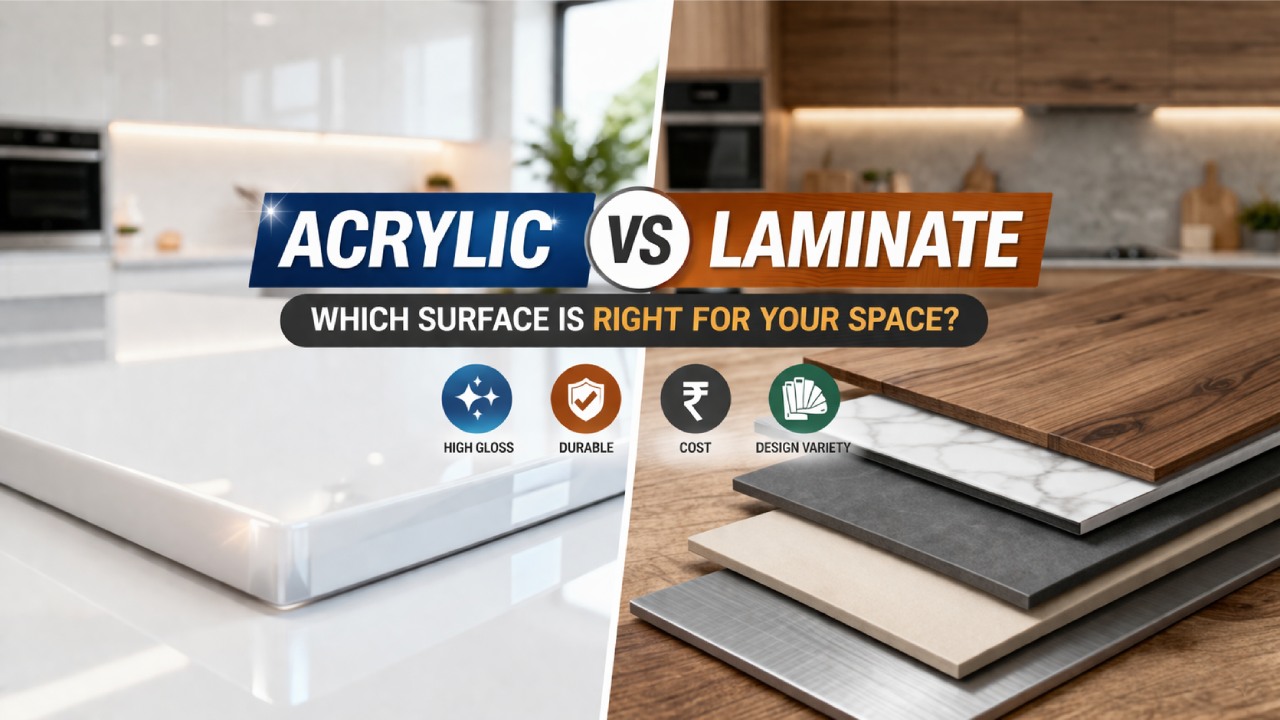
Unlike plain metal partitions, compact laminate is available in a wide range of colors, woodgrains, and finishes — meaning designers no longer have to trade durability for aesthetics.
Where It's Used
Compact laminate washroom partitions are now standard in:
- Corporate offices and coworking spaces
- Malls, airports, and other high-footfall public facilities
- Schools, colleges, and universities
- Gyms, fitness centers, and sports facilities
- Hospitals and healthcare buildings
In each case, the combination of moisture resistance, hygiene, and low long-term maintenance cost makes compact laminate the more economical choice over a building's lifetime, even when the upfront cost is slightly higher than plywood.
Stylam Cuboid: Purpose-Built for This Exact Application
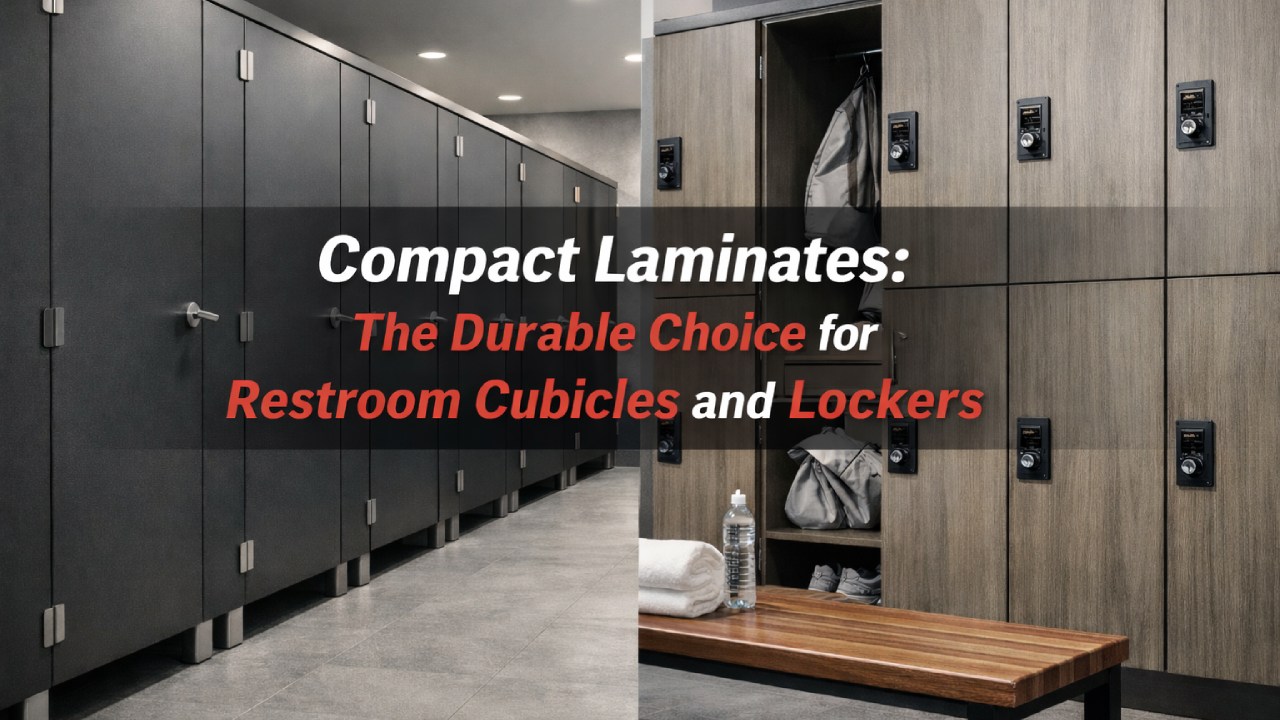
Stylam's Cuboid compact laminate range was engineered specifically for durable, stylish washroom cubicles and lockers. It's already the go-to specification for offices, gyms, schools, and public facilities that need partitions built to withstand constant use without losing their appearance.
Cuboid is available across three décor families to suit different design briefs:
- Solids — clean, minimalist tones for a contemporary look
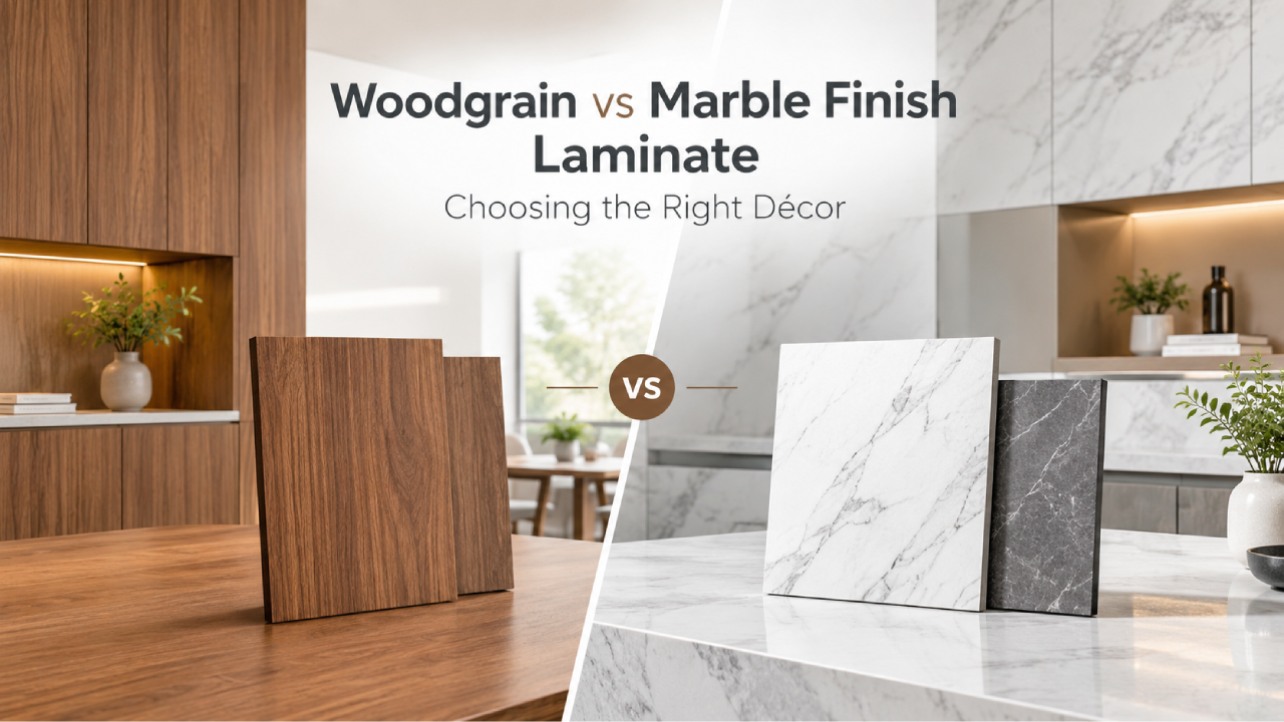
- Woodgrain — warm, natural texture for a softer aesthetic
- Marble & Pattern — a premium, upscale finish for higher-end commercial spaces
Because it's part of Stylam's broader Compact Laminates range, Cuboid shares the same core performance properties — moisture resistance, impact resistance, and hygienic surface — that make compact laminate the standard choice across washroom, lab, and high-traffic applications.
How to Choose the Right Compact Laminate for Your Project
When specifying washroom partitions, consider:
- Panel thickness — thicker panels (typically 12–20mm) offer greater rigidity and are standard for freestanding cubicle partitions.
- Edge treatment — self-colored or through-color panels avoid the peeling and staining issues associated with edge-banded boards.
- Hardware compatibility — confirm the panel is compatible with standard cubicle hardware (hinges, locks, feet) for your chosen thickness.
- Design family — match the décor to your building's overall interior language rather than treating the washroom as an afterthought.
It's also worth confirming that any compact laminate you specify meets recognized material standards. In India, compact laminates of 2mm thickness and greater fall under IS 2046 (Part 4), the Bureau of Indian Standards specification — aligned with the international ISO 4586 series — that governs classification and performance requirements for compact laminate panels.
Final Thoughts
Compact laminate didn't become the industry standard for washroom partitions by accident — it solved a real, recurring problem with older materials failing in exactly the conditions washrooms create every day. For architects and facility managers specifying new builds or renovations, it remains the most reliable balance of durability, hygiene, and design flexibility available.
If you're specifying partitions for an upcoming project, explore Stylam's Cuboid range to see available thicknesses, décor options, and technical specifications.
Related Reading