The modern workplace has undergone a dramatic transformation over the last decade. Offices are no longer just rows of cubicles and closed cabins; they are now collaborative, flexible, design-driven environments that reflect a company’s culture and brand identity.
With this evolution has come a growing demand for smart interior materials that are durable, stylish, sustainable, and easy to maintain. One material that has rapidly gained popularity among architects and interior designers is High Pressure Laminate (HPL).
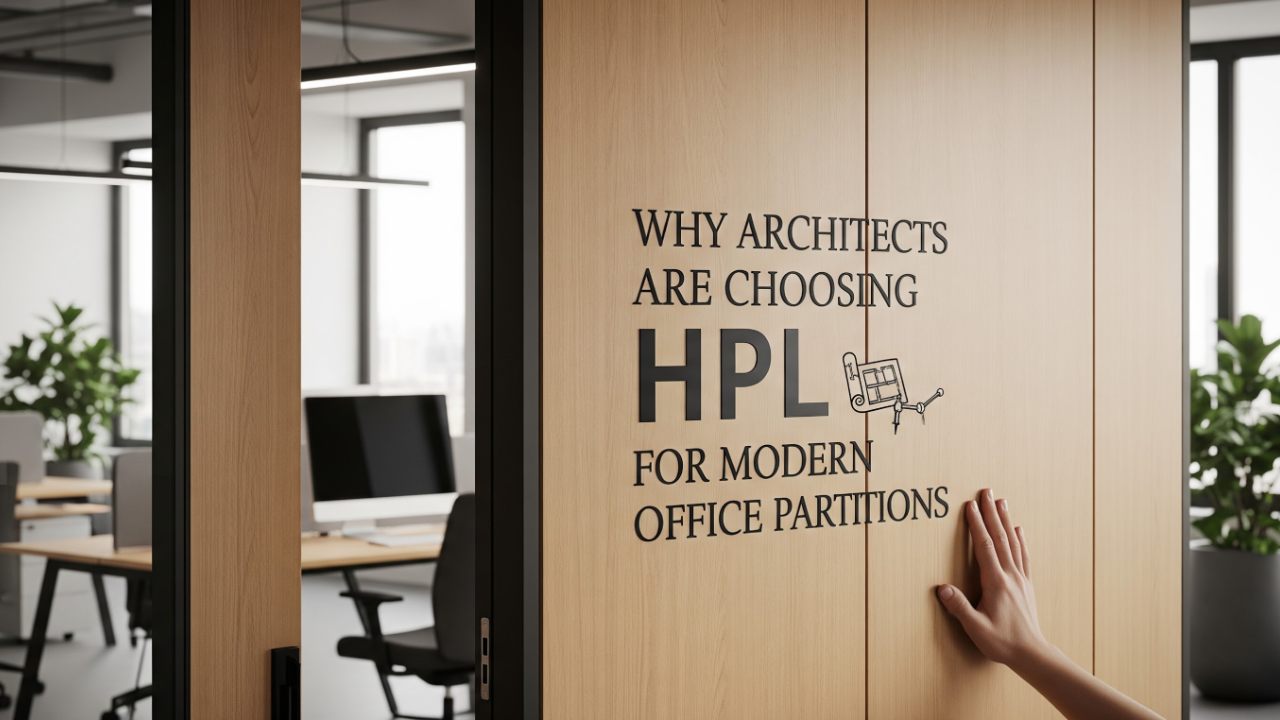
From sleek office partitions and meeting room dividers to workstation panels and collaborative pods, HPL sheets are redefining how modern office spaces are designed.
So why exactly are architects choosing HPL for modern office partitions?
Let’s explore the reasons behind this growing preference.
The Rise of Flexible and Design-Driven Office Interiors
Today’s offices must balance multiple functional and aesthetic requirements:
- Visual privacy without blocking natural light
- Noise control without making spaces feel enclosed
- Durability to withstand heavy daily use
- Easy maintenance and long-term cost efficiency
- Modern aesthetics that enhance brand image
- Sustainable material choices
Traditional partition materials like gypsum boards, plywood panels, and glass alone no longer meet all these needs effectively. This is where HPL for office partitions has emerged as a superior alternative.
What Is HPL (High Pressure Laminate)?
High Pressure Laminate (HPL) is a decorative surface material manufactured by compressing multiple layers of kraft paper and decorative paper under high heat and pressure.
The result is a highly durable, impact-resistant, and moisture-resistant surface that can be applied to substrates such as:
- MDF
- Plywood
- Particle board
- Aluminium honeycomb panels
HPL sheets are widely used for:
- Office partitions
- Wall panelling
- Furniture surfaces
- Workstations
- Doors
- Cabinets
- Reception desks
Also Read: 10 Creative Ways to Use HPL Laminate Sheets in Home Décor
Why HPL Is Ideal for Modern Office Partitions
Let’s break down the key reasons architects and designers are increasingly choosing HPL.
1. Exceptional Durability for High-Traffic Environments
Offices are high-usage spaces. Partition panels are constantly exposed to:
- Accidental bumps and impacts
- Movement of furniture
- Trolleys and office equipment
- Daily cleaning and wiping
- Human contact
HPL sheets for office interiors are engineered to withstand these conditions.
They offer:
- High impact resistance
- Excellent scratch resistance
- Strong surface hardness
- Long-term dimensional stability
Unlike paint or veneer, HPL surfaces do not chip, peel, or fade easily, making them ideal for long-term commercial use.
2. Superior Aesthetic Versatility
One of the biggest reasons architects love HPL is its design flexibility.
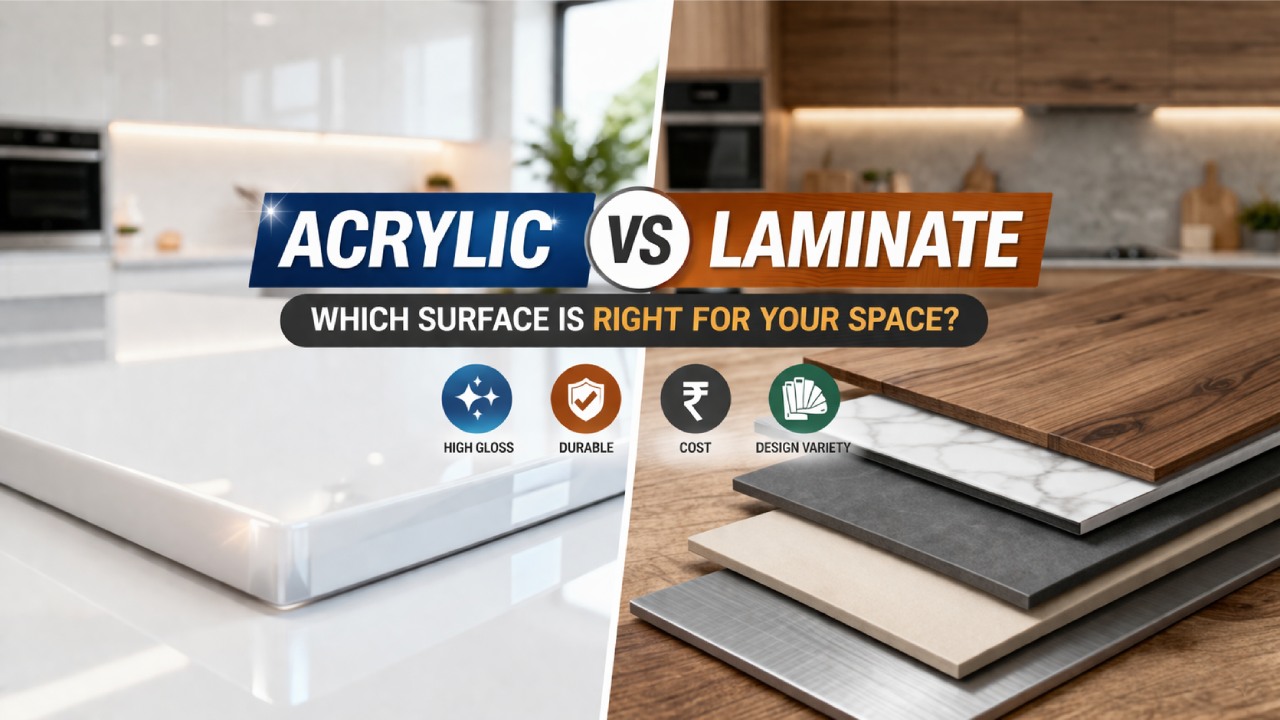
HPL is available in:
- Solid colours
- Woodgrain textures
- Marble and stone finishes
- Metallic effects
- Fabric-inspired designs
- Abstract patterns
This allows designers to create office partitions that:
- Match corporate branding
- Complement flooring and furniture
- Create visual zoning
- Add warmth or minimalism
- Enhance premium appeal
Whether the design goal is a warm corporate look or a bold modern workspace, decorative laminates for office partitions offer endless possibilities.
3. Cost-Effective Alternative to Natural Materials
Natural wood, stone, and metal surfaces look stunning but are often:
- Expensive
- Difficult to maintain
- Sensitive to moisture and scratches
- Heavy and complex to install
HPL provides the same visual richness at a fraction of the cost.
For large office projects, this cost efficiency makes a significant difference without compromising aesthetics or performance.
4. Low Maintenance and Easy Cleaning
Office interiors must be easy to maintain, especially in shared spaces.
HPL partitions are:
- Non-porous
- Stain resistant
- Easy to wipe clean
- Resistant to grease, ink, and dirt
Routine cleaning with a damp cloth and mild detergent is usually sufficient.
This makes HPL sheets a practical choice for:
- Co-working spaces
- Corporate offices
- IT parks
- Educational institutions
- Healthcare offices
5. Moisture and Heat Resistance
Office spaces are often exposed to:
- Air-conditioning condensation
- Humidity
- Pantry steam
- Spills and splashes
HPL is inherently moisture-resistant and does not warp or swell easily.
Premium HPL sheets also offer:
- Heat resistance
- Fire-retardant grades (FR HPL)
- Dimensional stability
This makes them ideal for:
- Pantry partitions
- Server room enclosures
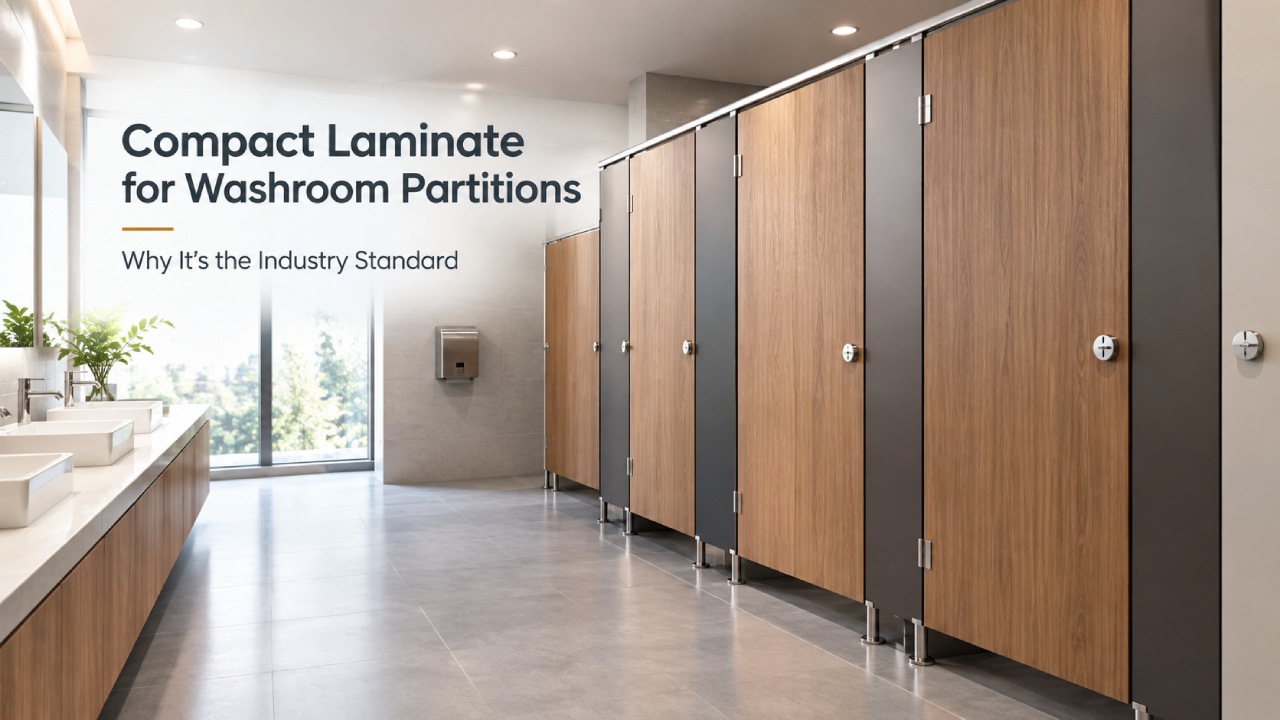
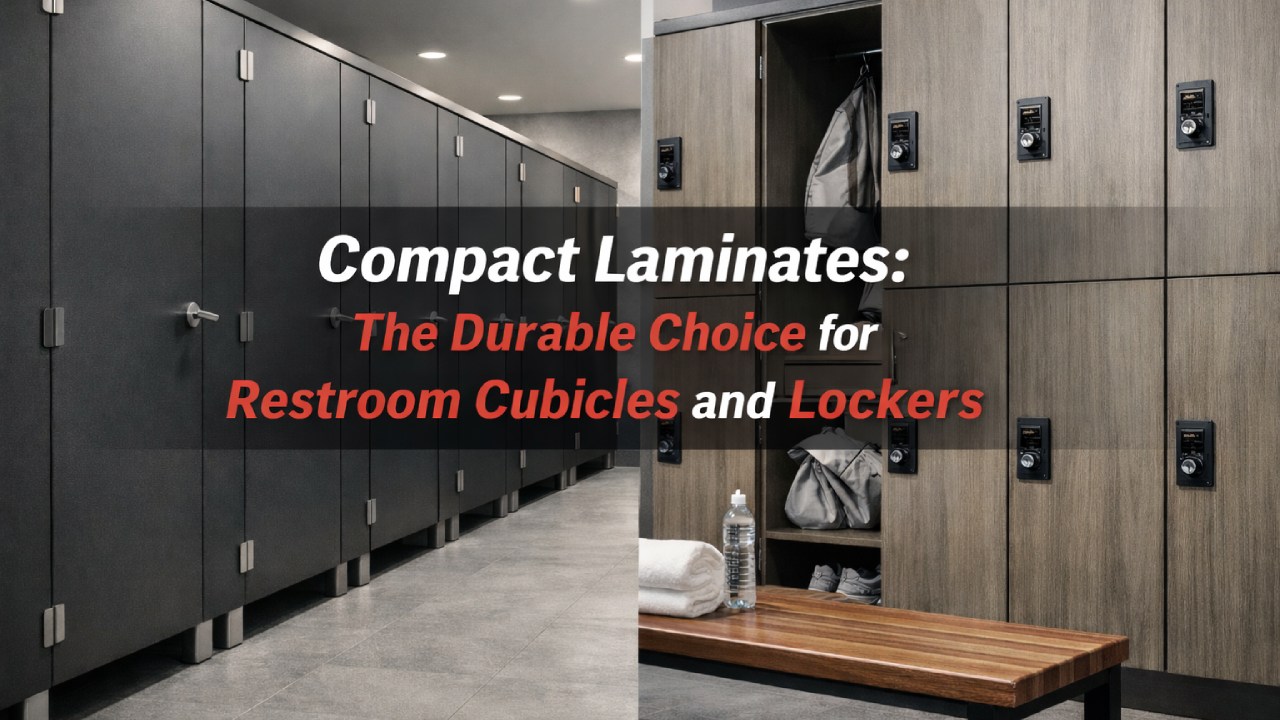
- Washroom cubicles
- Cafeteria dividers
6. Fast Installation and Modular Flexibility
Speed of execution is critical in commercial projects.
HPL panels can be:
- Factory-finished
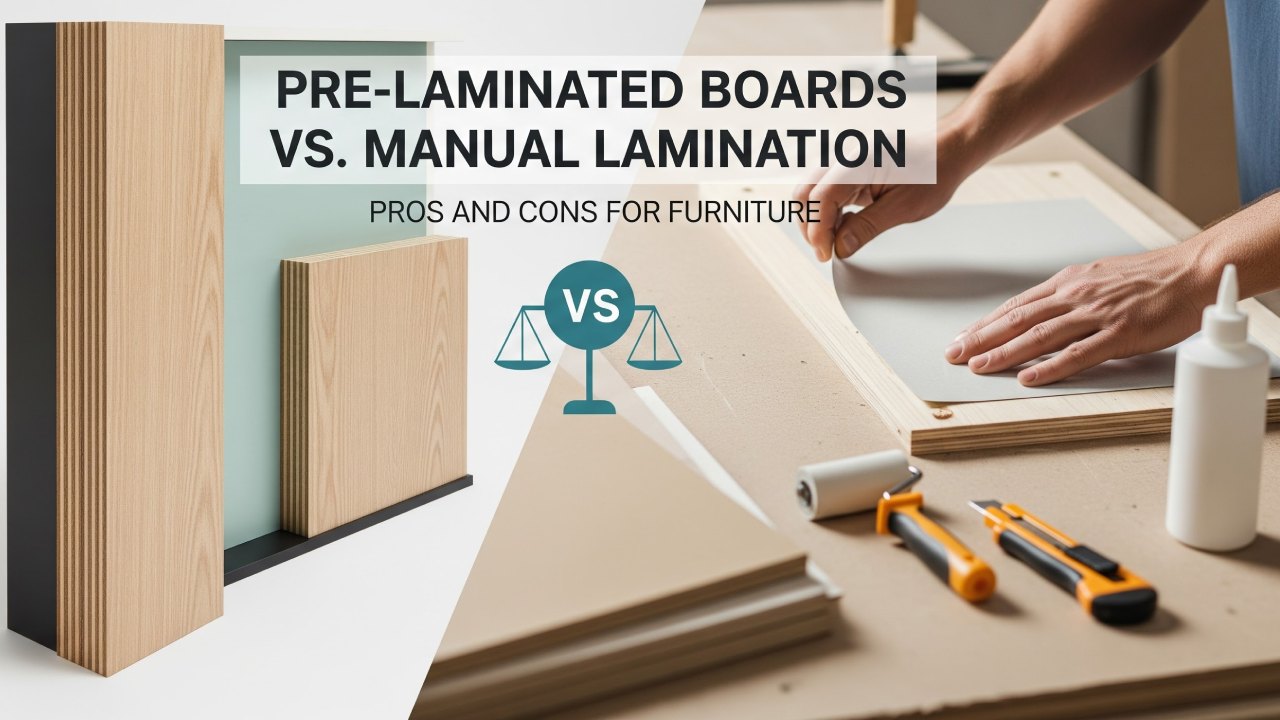
- Pre-laminated on boards
- Cut and edged quickly
- Installed with modular partition systems
This allows faster project completion and minimal on-site disruption.
Architects also appreciate how easily HPL panels can be:
- Replaced
- Reconfigured
- Upgraded
when office layouts change.
7. Acoustic Compatibility
While HPL itself is not a sound-absorbing material, it works exceptionally well when combined with:
- Acoustic substrates
- Mineral wool cores
- Perforated backing panels
This allows architects to design office partitions that provide both:
- Visual privacy
- Noise reduction
making HPL suitable for:
- Meeting rooms
- Focus pods
- Conference halls
- HR cabins
8. Sustainability and Green Building Compliance
Sustainability is now a major priority in commercial construction.
Leading HPL manufacturers in India, such as Stylam, produce laminates that:
- Use responsibly sourced paper
- Follow low-emission manufacturing processes
- Comply with green building standards
- Offer long service life, reducing replacement waste
Using durable HPL partitions helps reduce material turnover and long-term environmental impact.
Also Read: Stylam Decorative Laminates: Elevating Spaces Inside and Out
Where Architects Are Using HPL in Office Spaces
HPL is now widely used across multiple office zones.
Common Applications:
- Workstation partitions
- Meeting room walls
- Cabin partitions
- Pantry and cafeteria dividers
- Reception backdrops
- Corridor wall panelling
- Collaborative pods
- Washroom cubicles
Its versatility makes it suitable for both functional and decorative elements.
Why HPL Is Better Than Traditional Partition Materials
Let’s compare HPL with common alternatives.
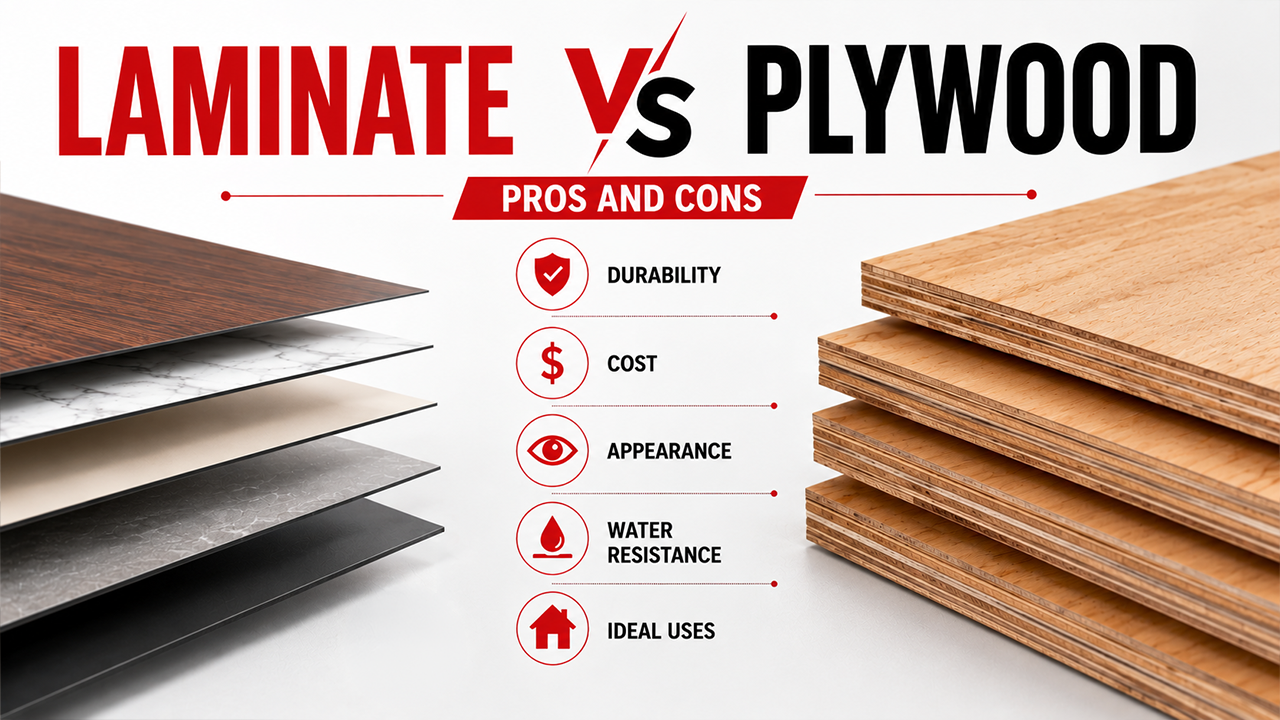
HPL vs. Painted Gypsum Boards
Painted gypsum boards:
- Scratch easily
- Stain permanently
- Require frequent repainting
- Are sensitive to moisture
HPL:
- Resists scratches and stains
- Requires minimal maintenance
- Has a much longer lifespan
- Offers richer design options
HPL vs. Veneer Panels
Veneer panels:
- Are expensive
- Scratch easily
- Require polishing
- Are moisture-sensitive
HPL:
- Offers wood-like finishes
- Is far more durable
- Needs no polishing
- Performs better in humid conditions
HPL vs. Glass Partitions
Glass partitions:
- Are expensive
- Show fingerprints and smudges
- Offer limited privacy
- Can crack or shatter
HPL:
- Provides privacy
- Is impact resistant
- Offers acoustic flexibility
- Is far easier to maintain
Design Trends: How Architects Are Using HPL Creatively
Modern office design is moving beyond plain partitions.
Popular HPL Partition Trends:
- Dual-tone partitions (light + dark)
- Woodgrain HPL with black metal frames
- Matte solid colour laminates
- Textured laminates for accent walls
- Branded colour partitions
- Vertical slat designs using HPL
These trends allow companies to create offices that feel both functional and inspiring.
Why Architects Prefer Stylam HPL for Office Partitions
Stylam is among the most trusted laminate manufacturers in India, known for innovation, design quality, and performance reliability.
Stylam HPL offers:
- Wide design range
- Premium surface finishes
- High scratch resistance
- Moisture-resistant grades
- Fire-retardant laminates
- Sustainable manufacturing standards
- Consistent quality for large projects
This reliability makes Stylam a preferred choice for:
- Corporate offices
- IT campuses
- Educational institutions
- Healthcare facilities
- Hospitality interiors
Final Thoughts
The modern office is no longer just a workspace — it is a reflection of a company’s culture, innovation, and brand personality.
Architects today need materials that combine:
- Durability
- Design flexibility
- Low maintenance
- Sustainability
- Cost efficiency
High Pressure Laminates (HPL) meet all these requirements beautifully.
From sleek workstation partitions to bold meeting room walls, HPL enables architects to design office interiors that are functional, inspiring, and future-ready.
With premium HPL solutions from Stylam, architects can confidently create modern office partitions that deliver long-term performance and timeless style.
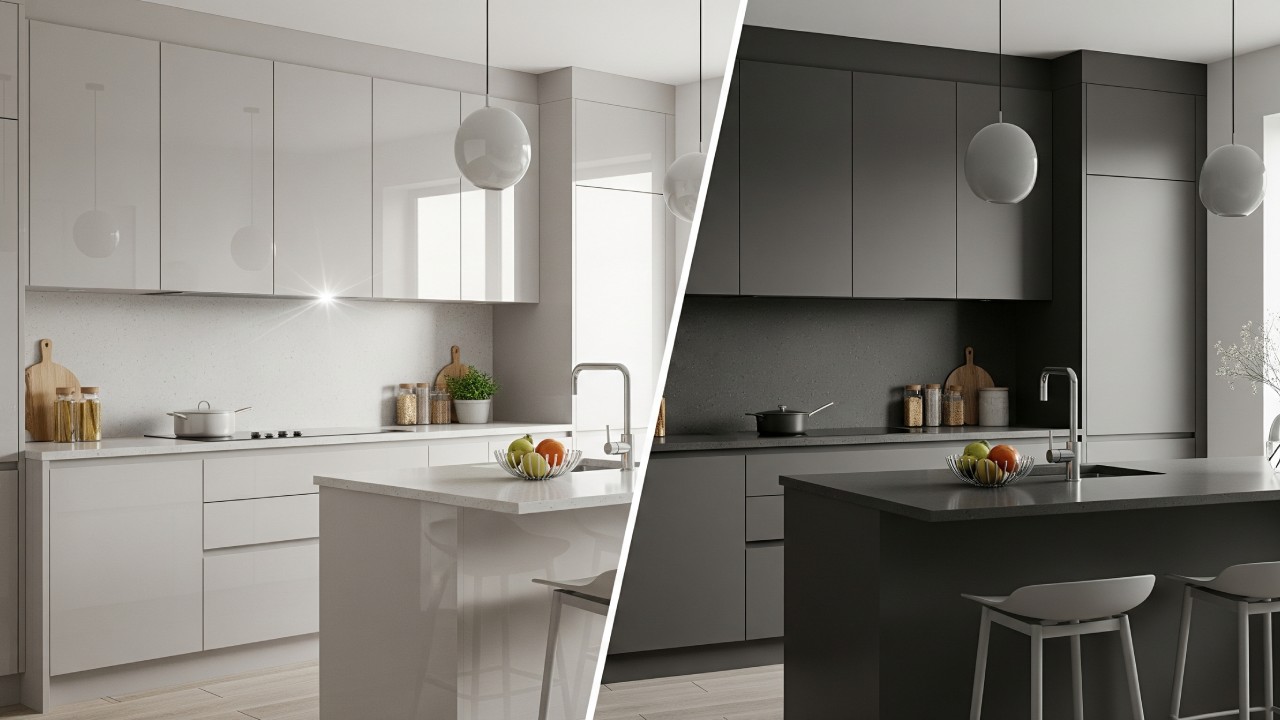
Also Read: Glossy vs Matte Laminates for Kitchen: Which One Should You Choose?