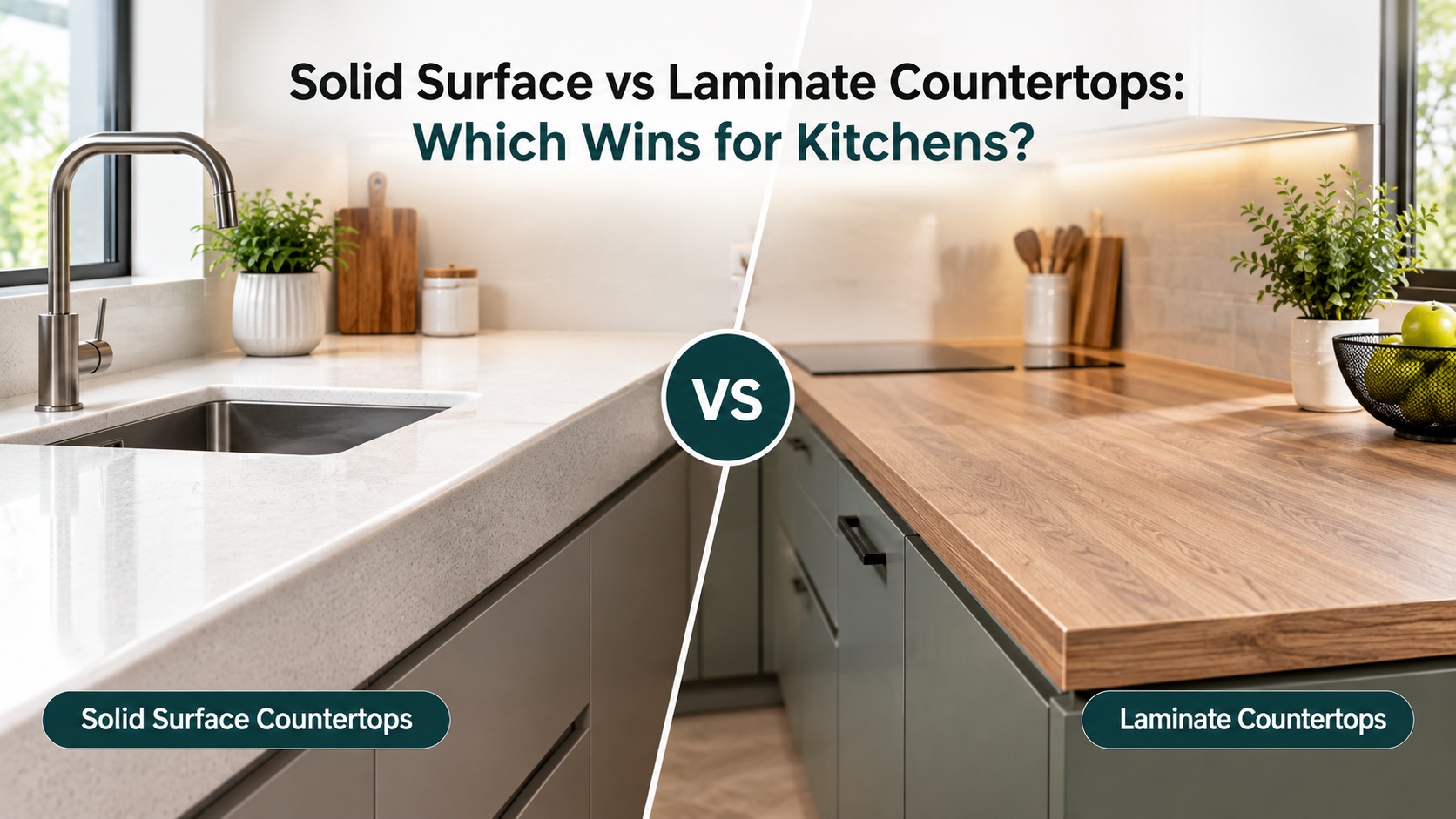
When choosing decorative surfaces for furniture, interiors or commercial spaces, two popular options are compact laminate and High-Pressure Laminate (HPL). Both are known for their durability, attractive finishes and versatility. However, they differ in construction, thickness, installation requirements and ideal applications.
Understanding the difference between compact laminate and HPL can help architects, interior designers, contractors and homeowners select the right material for their projects.
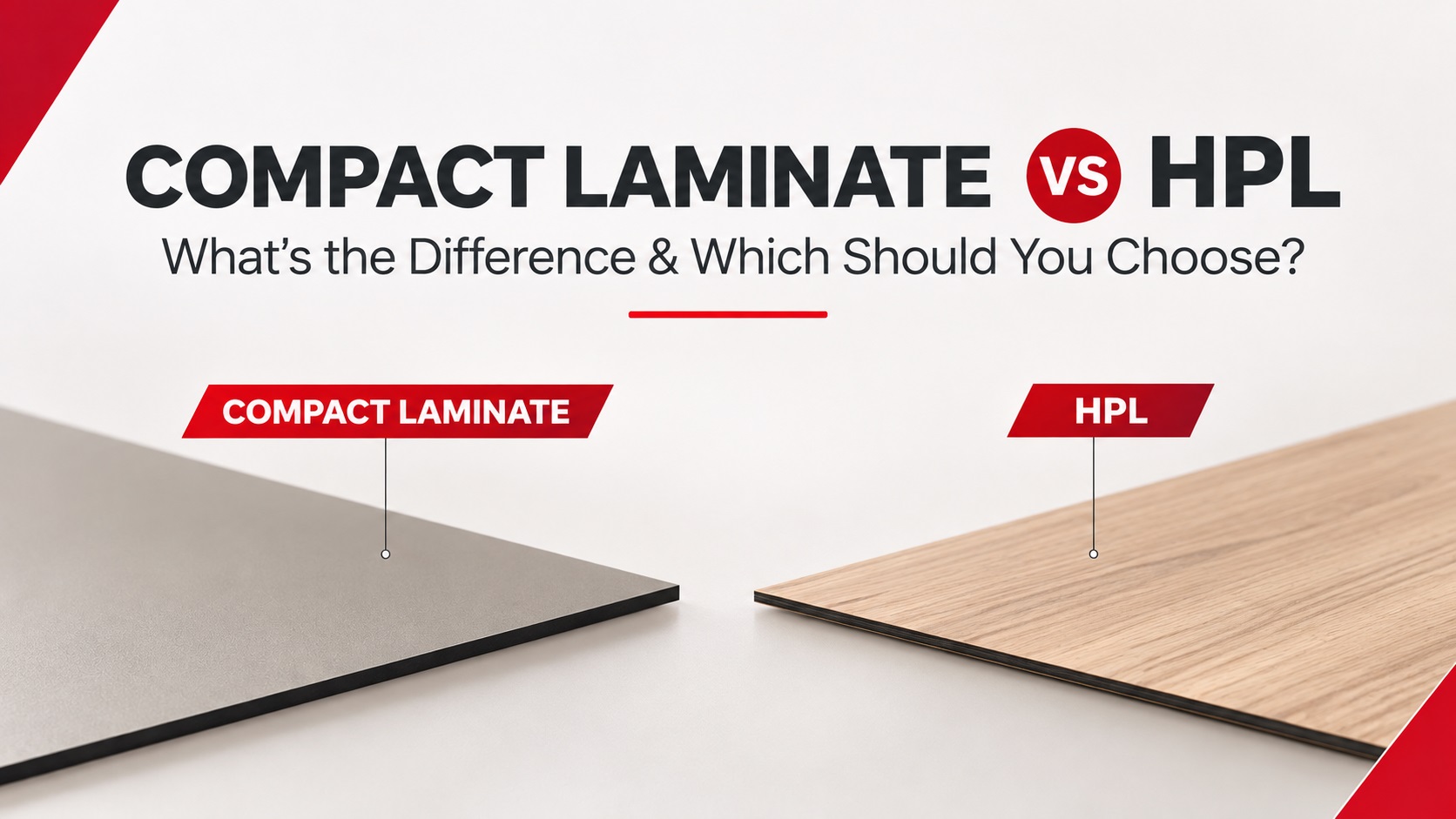
Although compact laminate is closely related to HPL, the two terms do not describe exactly the same product format. HPL is generally used as a surface layer bonded to a supporting substrate, while compact laminate is manufactured as a thicker, self-supporting panel.
In this guide, we compare compact laminate vs HPL, explain their benefits and applications, and help you decide which option is suitable for your requirements.
What Is HPL (High-Pressure Laminate)?
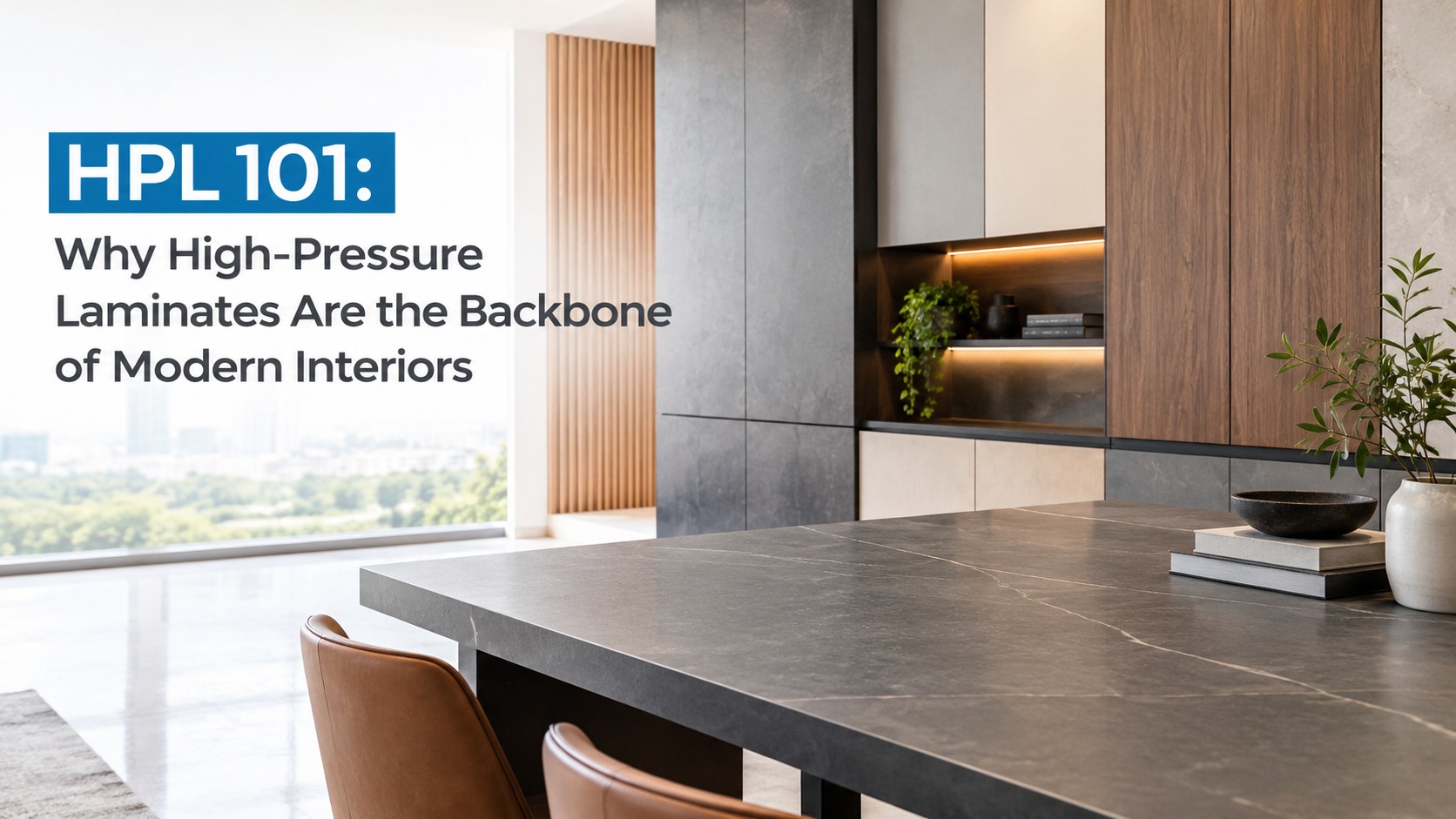
High-Pressure Laminate, commonly known as HPL, is a decorative surfacing material manufactured by pressing layers of kraft paper, decorative paper and resin under high pressure and temperature.
The process creates a durable surface that can offer resistance to everyday wear, scratches, stains and heat, depending on the product specification.
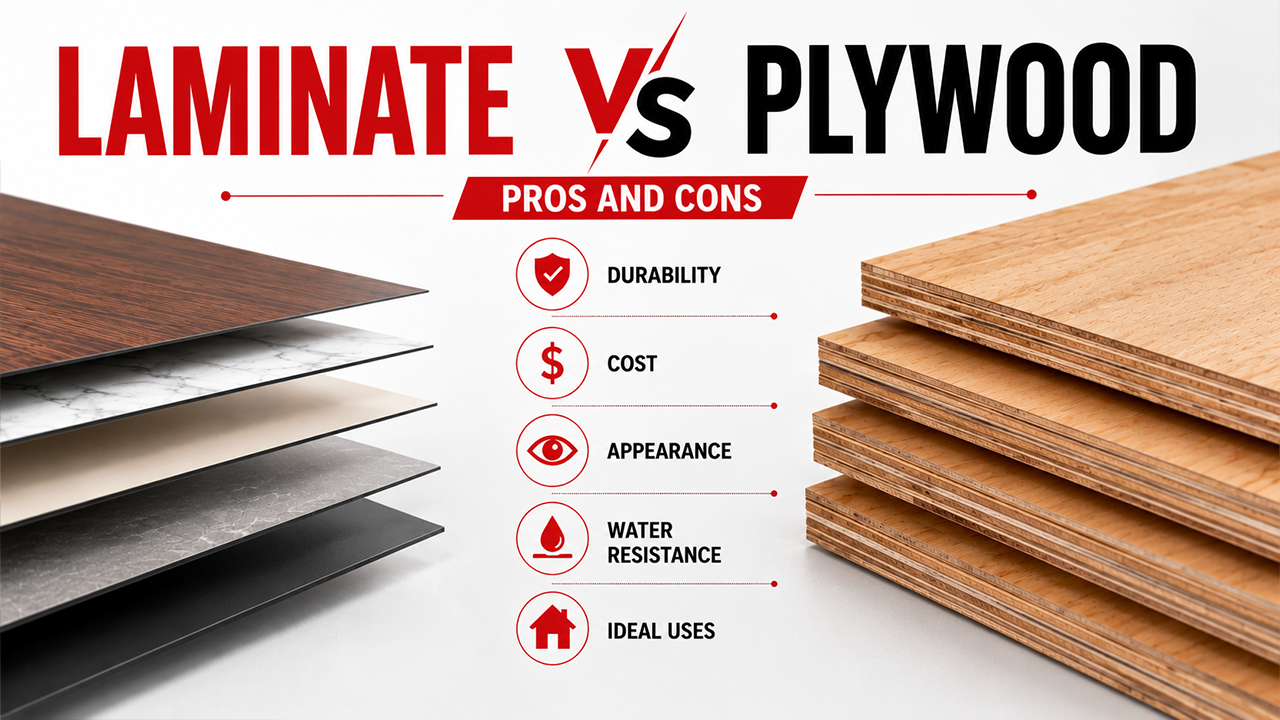
HPL is commonly used as a decorative layer on substrates such as plywood, MDF and particleboard. Once bonded to a suitable base material, it can be used for furniture, cabinetry, doors, countertops and wall panels.
Key Features of HPL
-
Durable surface: Designed to withstand everyday use and surface wear.
-
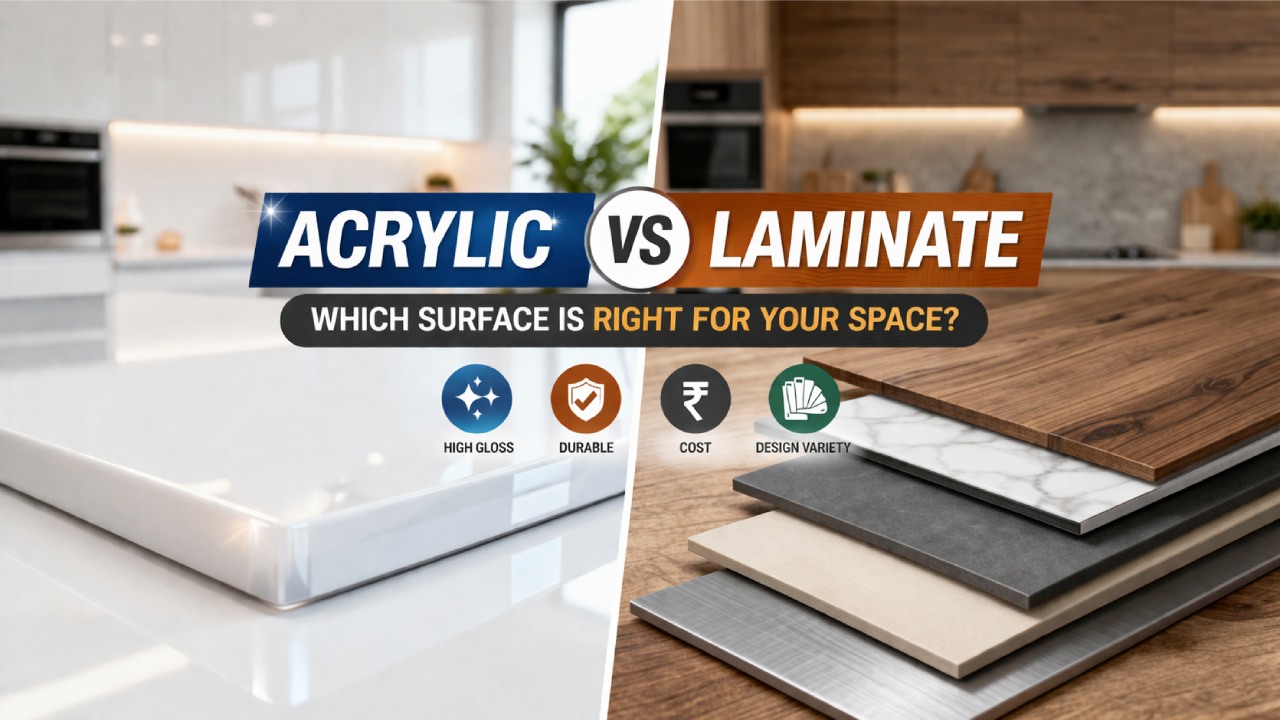
Decorative variety: Available in woodgrain, stone, solid colours, textures and other designs.
-
Easy maintenance: Generally simple to clean with appropriate care.
-
Versatile applications: Suitable for furniture, wardrobes, cabinets, wall panels and interior surfaces.
-
Design flexibility: Offers different colours, patterns and surface finishes for residential and commercial interiors.
HPL is a practical choice when a decorative, durable surface is required over a supporting material.
What Is Compact Laminate?
Compact laminate is a high-density laminate panel manufactured by compressing multiple layers of resin-impregnated kraft paper under high pressure and temperature. Unlike conventional decorative HPL, compact laminate is produced as a thicker panel with a dense internal core.
Its construction allows it to function as a self-supporting panel in many applications, without requiring a separate substrate in the same way as standard thin HPL.
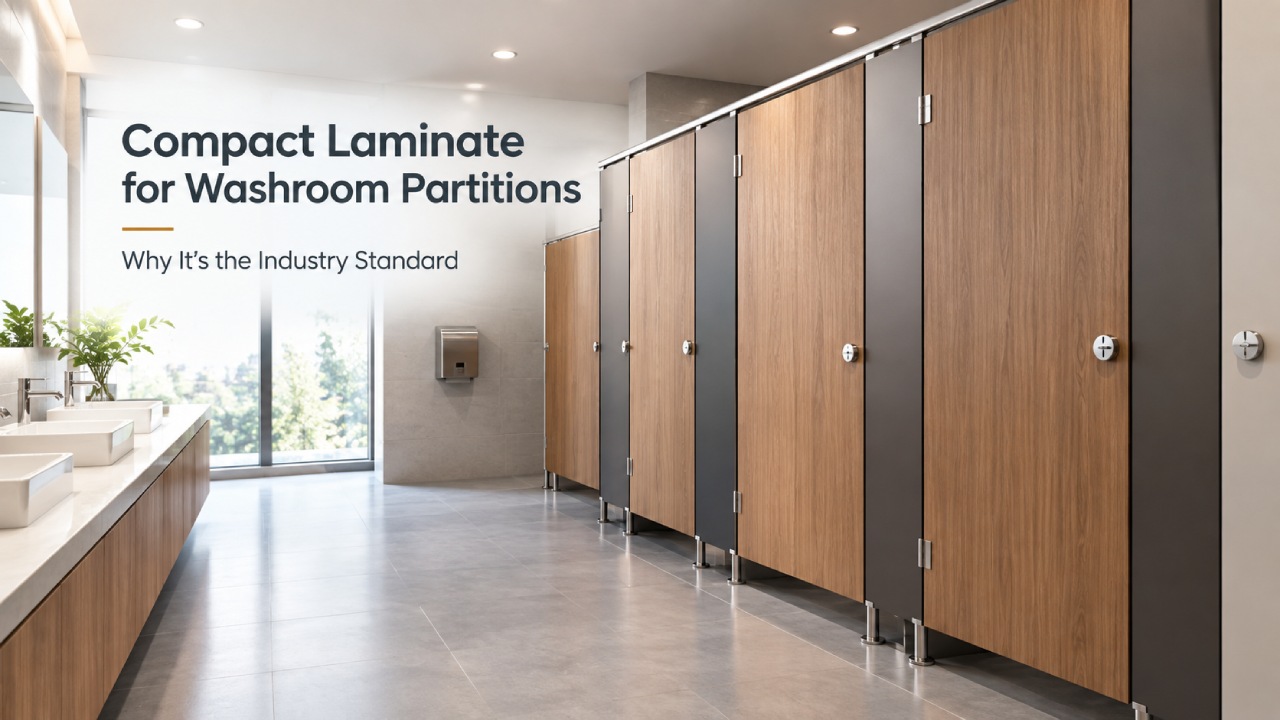
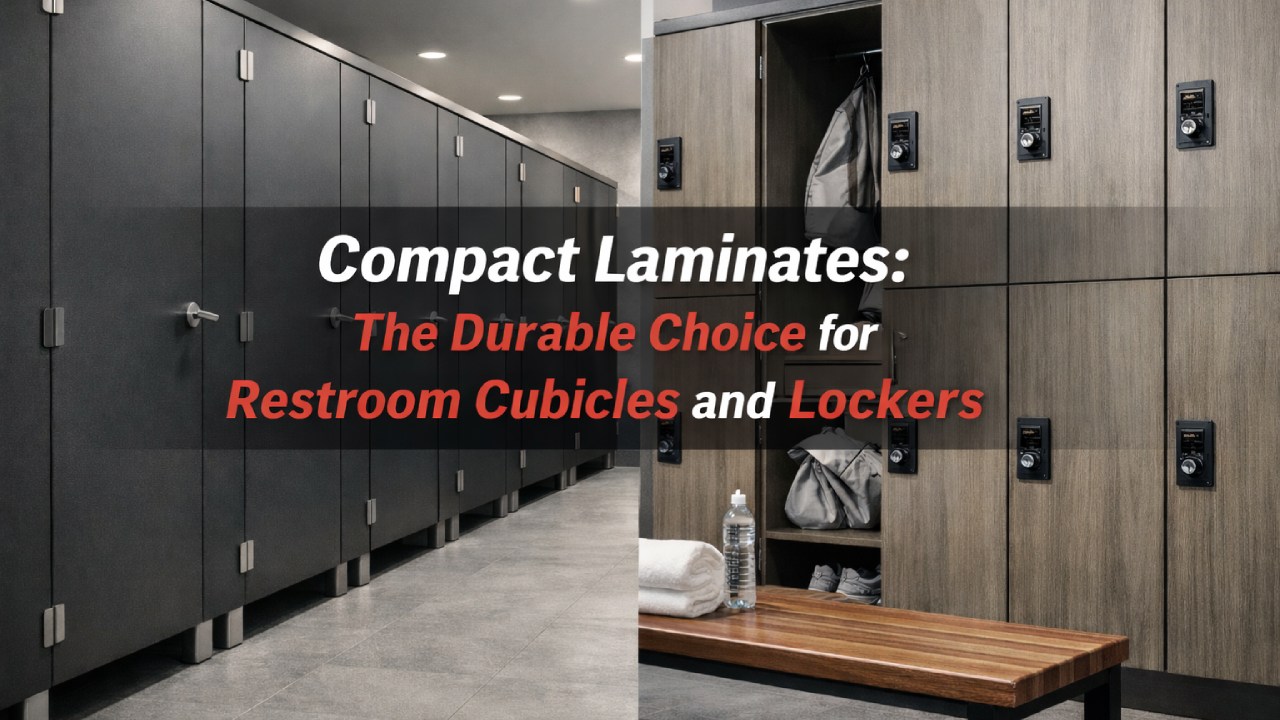
Compact laminates are widely used in environments where durability, moisture resistance and structural strength are important. Common applications include washroom partitions, lockers, laboratory furniture, wall cladding, worktops and commercial interiors.
Explore the Stylam Compact Laminates range for surface solutions designed for different interior and functional applications.
Key Features of Compact Laminate
-
Self-supporting construction: Can be used as a panel without a separate substrate in suitable applications.
-
Moisture resistance: Its dense construction makes it suitable for many humid and wet-area environments.
-
Impact resistance: Designed for demanding spaces with regular use.
-
Durable performance: Suitable for high-traffic commercial and institutional settings.
-
Decorative options: Available in different colours, patterns and finishes.
-
Application flexibility: Used for partitions, furniture, worktops, wall cladding and more.
Compact Laminate vs HPL: Key Differences
The main difference between compact laminate and conventional HPL is their construction and intended use. HPL is typically a decorative surface material bonded to a substrate, whereas compact laminate is a thicker, self-supporting panel.
Here is a comparison of their key characteristics.
| Feature |
HPL |
Compact Laminate |
| Construction |
Decorative laminate sheet |
Thick, dense laminate panel |
| Core |
Usually bonded to a separate substrate |
Integrated multi-layer core |
| Support |
Generally requires a substrate |
Self-supporting in suitable applications |
| Thickness |
Available in relatively thin sheets |
Available in thicker panel formats |
| Moisture Performance |
Depends on the laminate, substrate and edge protection |
Dense construction offers strong moisture resistance |
| Durability |
Suitable for everyday residential and commercial use |
Suitable for demanding and high-traffic applications |
| Installation |
Usually bonded to MDF, plywood or particleboard |
Can be installed as a panel using suitable fixing systems |
| Common Uses |
Cabinets, wardrobes, furniture and decorative surfaces |
Washroom partitions, lockers, worktops and wall cladding |
| Design Options |
Wide range of colours, textures and patterns |
Wide range of decorative surfaces and panel options |
| Cost Considerations |
Depends on laminate grade, substrate and fabrication |
Depends on panel thickness, grade, fabrication and installation |
Note: Actual performance, available thicknesses and suitability vary by product specification and manufacturer. Always check the technical data for the selected material.
1. Difference in Construction
Construction is one of the most important differences between compact laminate and HPL.
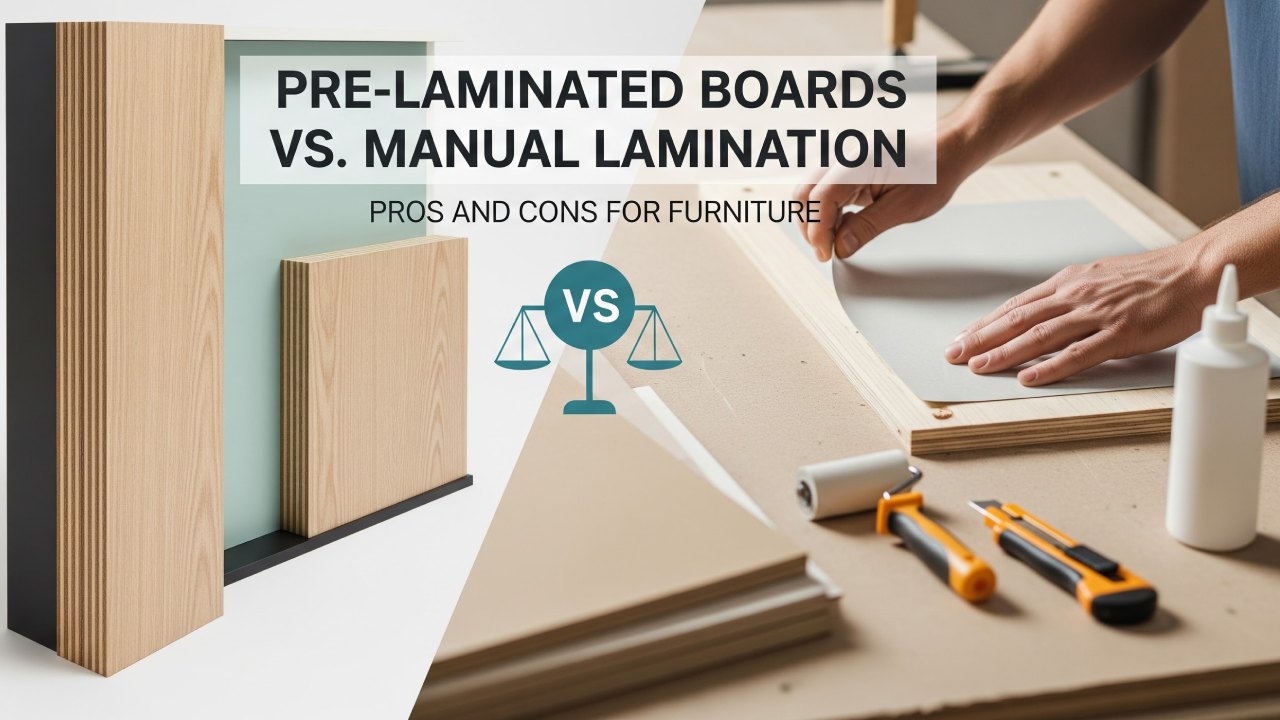
Conventional HPL is manufactured as a decorative sheet. It is generally bonded to a supporting material such as plywood, MDF or particleboard to create a finished furniture or interior surface.
Compact laminate, on the other hand, is manufactured with multiple layers pressed together to form a dense, integrated panel. Its core is part of the panel itself, allowing it to serve as a self-supporting material in suitable applications.
This difference affects how the materials are fabricated, installed and used.
2. Difference in Thickness and Support
HPL sheets are generally thinner and are commonly used as surface finishes over a substrate. The supporting board provides the necessary structure for the finished furniture or panel.
Compact laminate is available in thicker formats and can be used independently as a panel where the design and installation system allow it.
For example, a wardrobe made with plywood and decorative HPL uses the plywood for structural support and HPL for the visible finish. A compact laminate washroom partition can use the compact panel itself as the main partition material.
The appropriate thickness depends on the application, panel dimensions, fixing arrangement and manufacturer's recommendations.
3. Moisture Resistance
Moisture performance is an important consideration when selecting materials for kitchens, bathrooms, laboratories and other humid environments.
Compact laminate has a dense, integrated construction that makes it suitable for many moisture-exposed applications. It is commonly considered for washroom cubicles, lockers and other areas where regular exposure to moisture is expected.
HPL can also provide a durable decorative surface. However, when it is bonded to a substrate, the overall performance depends on the substrate, adhesive, edge treatment and installation quality.
For areas with frequent water exposure, selecting a suitable substrate and protecting exposed edges are essential when using conventional HPL.
4. Durability and Impact Resistance
Both HPL and compact laminate are designed for durable interior applications, but their construction makes them suitable for different levels of demand.
HPL provides a hard-wearing decorative surface for furniture, cabinets, doors and other interior elements. It is a practical option for spaces that experience normal everyday use.
Compact laminate is often selected for demanding environments where panels may experience frequent contact, impact and heavy usage. Its dense construction makes it suitable for commercial washrooms, educational institutions, laboratories and public facilities.
The actual resistance to impact, scratches, heat and chemicals depends on the product grade and technical specification.
5. Design and Finish Options
Design is another important factor when comparing compact laminate and HPL.
HPL is available in a wide range of decorative options, including:
-
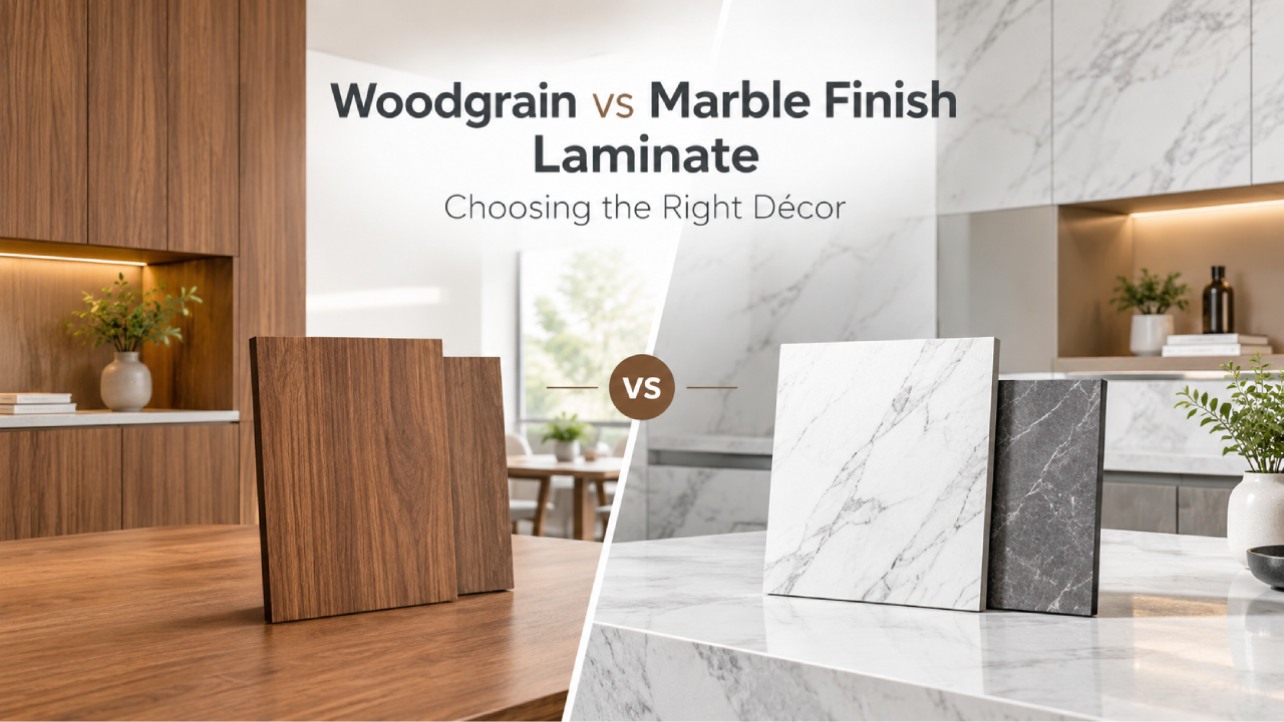
Woodgrain finishes
-
Marble and stone-inspired patterns
-
Solid colours
-
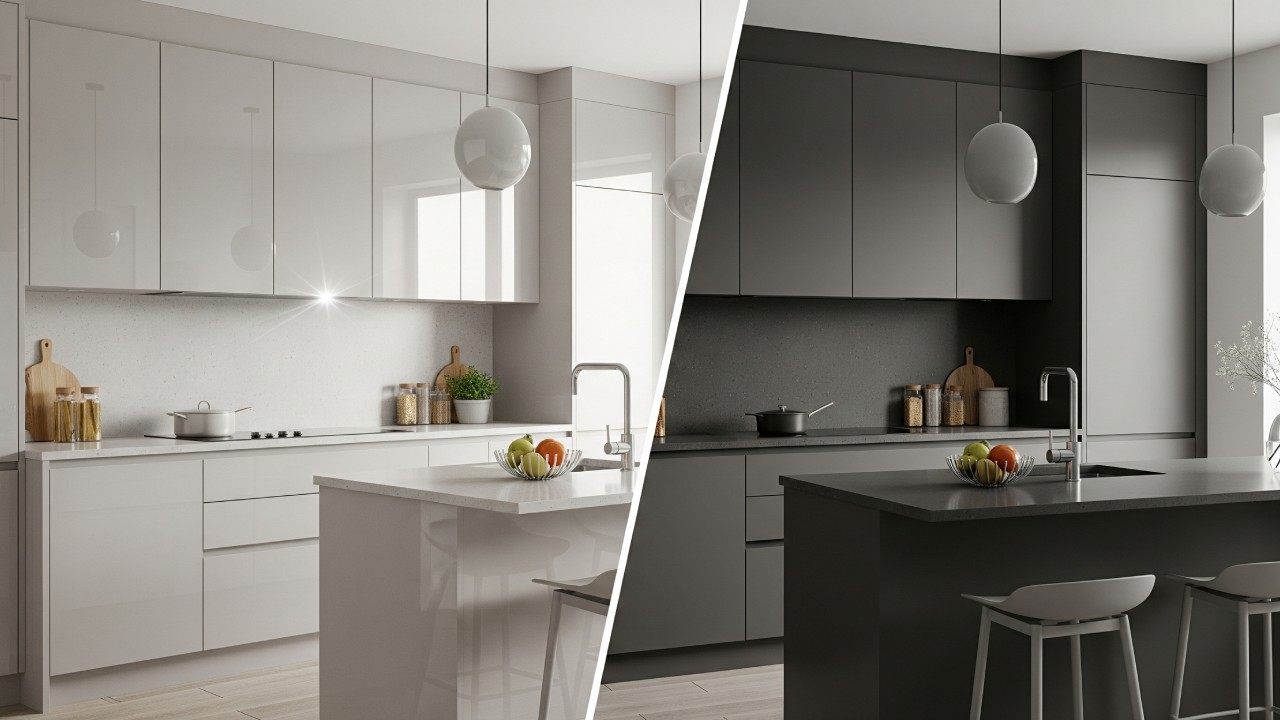
Matte and high-gloss finishes
-
Textured decorative surfaces
Compact laminate also offers a variety of colours, patterns and finishes, allowing designers to maintain a consistent visual theme across functional and decorative areas.
For example, Stylam Unicore offers a colour-through-core concept, where the core and surface share the same colour. This can be useful for designs where exposed panel edges are visible.
6. Installation and Maintenance
HPL and compact laminate have different installation requirements.
Conventional HPL is generally bonded to a prepared substrate using an appropriate adhesive and fabrication process. The substrate must be suitable for the intended application, and correct edge finishing helps protect the panel assembly.
Compact laminate can be fabricated and installed as a self-supporting panel using suitable hardware, supports and fixing systems. Installation should follow the manufacturer's recommendations for panel thickness, spacing, ventilation and movement.
Both materials are generally easy to maintain with appropriate cleaning methods. Use a soft cloth and a suitable cleaning solution, and avoid abrasive products that may damage the surface.
Applications: Where Should You Use HPL and Compact Laminate?
Choosing between HPL and compact laminate becomes easier when you consider the environment and intended use.
Common Applications of HPL
HPL is widely used in residential and commercial interiors, including:
-
Kitchen cabinets and shutters
-
Wardrobes and storage furniture
-
Office desks and workstations
-
Decorative wall panels
-
Interior doors
-
Furniture surfaces
-
Retail and hospitality interiors
It is especially useful when a decorative finish is needed over a suitable supporting board.
Common Applications of Compact Laminate
Compact laminate is suitable for applications that require a thicker, durable panel.
Typical uses include:
-
Washroom partitions: Suitable for commercial washrooms and public facilities.
-
Lockers: Useful in schools, gyms, offices and other high-traffic spaces.
-
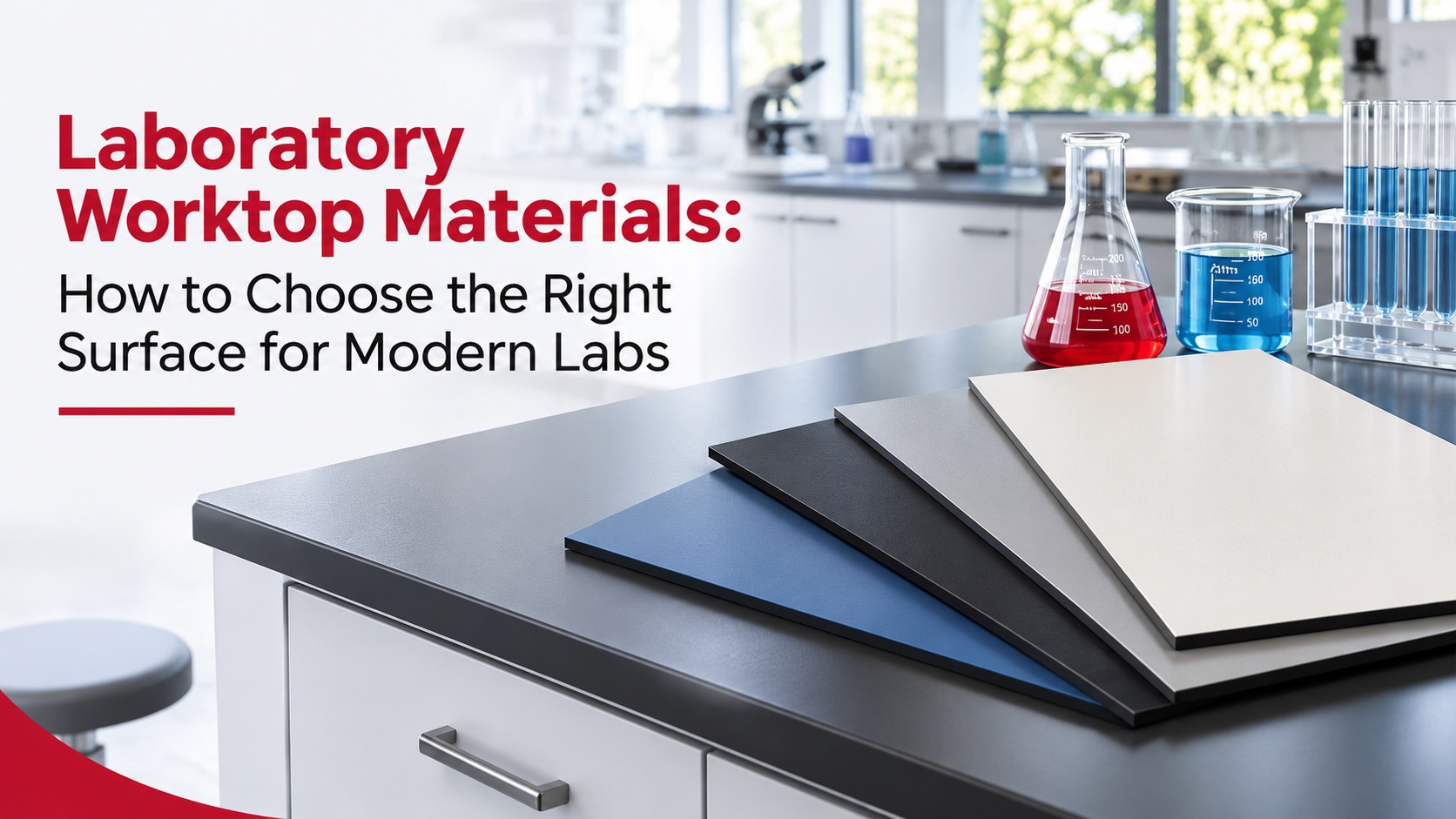
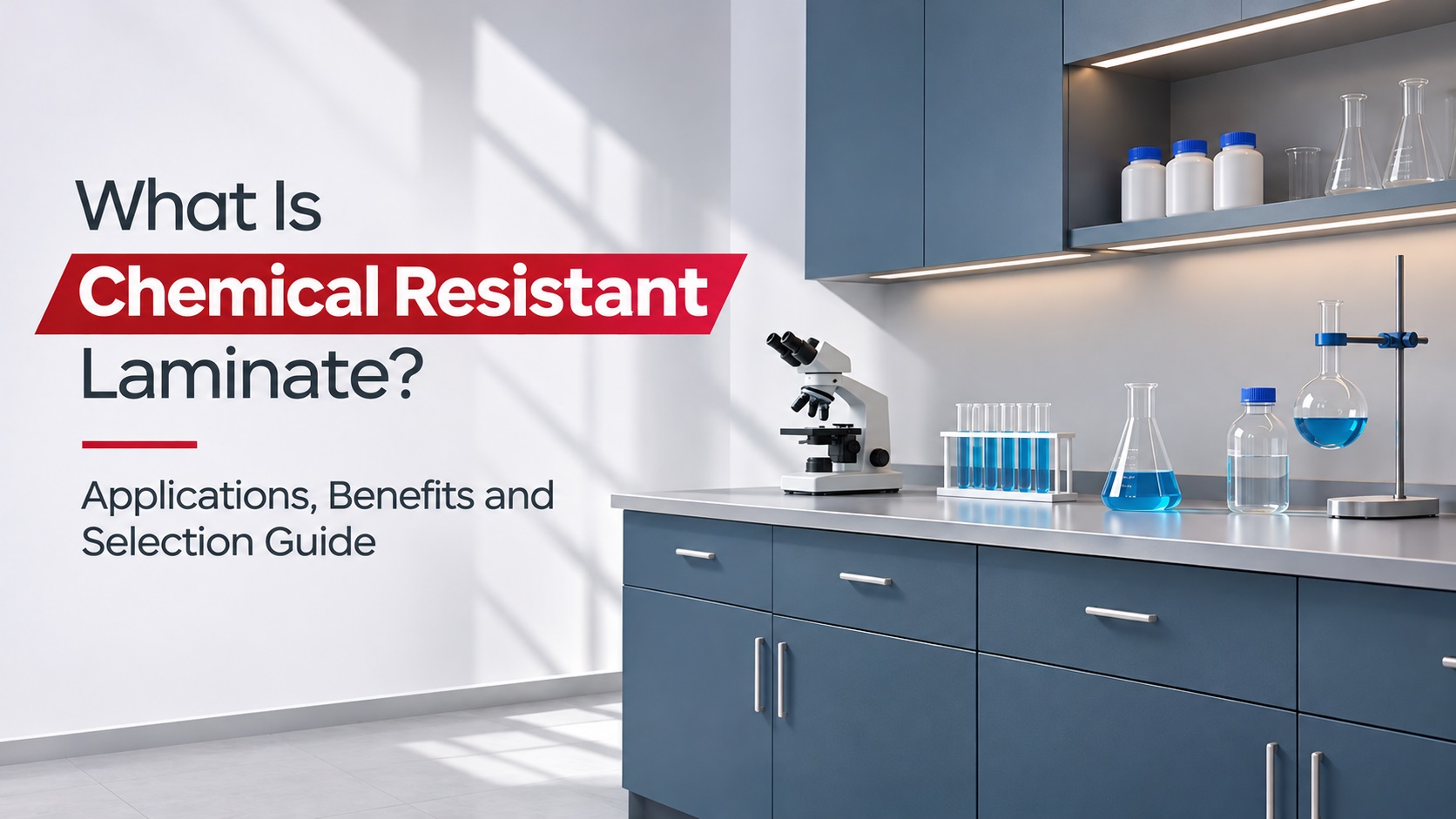
Laboratory worktops: Specialised options can be selected for environments requiring chemical and stain resistance.
-
Wall cladding: Provides durable decorative panels for interior and selected exterior applications.
-
Commercial furniture: Suitable for demanding furniture and work surfaces.
-
Kitchen surfaces: Selected compact panels can be used for countertops and other kitchen applications.
Stylam offers specialised compact laminate ranges for different needs:
-
Lab Mate – designed for laboratory and healthcare environments, with features including chemical, stain and heat resistance.
-
Cuboid – developed for applications such as washroom cubicles and lockers.
-
Fascia – designed for exterior cladding applications.
-
Tablex – suitable for tabletop and work-surface applications.
-
Kitchenate – designed for kitchen-related surface applications.
Always review the product's technical documentation to confirm suitability for the intended environment.
Compact Laminate vs HPL: Which One Should You Choose?
There is no single answer for every project. The right choice depends on the application, design requirements, installation method and expected usage.
Choose HPL If:
-
You need a decorative surface for furniture or cabinetry.
-
You plan to bond the laminate to plywood, MDF or another suitable substrate.
-
You want a wide choice of decorative finishes.
-
Your project involves wardrobes, cabinets, doors or interior furniture.
-
You need a practical surface finish for everyday residential or commercial use.
Choose Compact Laminate If:
-
You need a thicker, self-supporting panel.
-
The application involves washrooms, partitions or lockers.
-
Moisture exposure is an important consideration.
-
The space experiences frequent use or heavy footfall.
-
You need a specialised panel for laboratory, commercial or other demanding environments.
Before finalising your choice, consider the panel dimensions, installation system, edge details, environmental conditions and technical requirements.
Why Choose Stylam for Decorative and Compact Laminates?
Stylam offers a range of decorative and specialised surface solutions for residential, commercial and institutional interiors.
Its compact laminate portfolio includes options for applications such as laboratories, washrooms, furniture, tabletops, kitchens and exterior cladding. Different product ranges are designed to address specific functional and design requirements.
Whether you are planning a decorative furniture surface or a durable panel for a demanding commercial environment, explore the Stylam Compact Laminates collection to find a suitable option.
For product information and project-related enquiries, contact Stylam.
Frequently Asked Questions
1. Is compact laminate the same as HPL?
Not exactly. Compact laminate is a thicker, self-supporting panel made using multiple layers of resin-impregnated paper. Conventional HPL is generally a thinner decorative sheet bonded to a separate substrate. Compact laminate is closely related to HPL technology but differs in panel construction and application.
2. Which is better, compact laminate or HPL?
Neither is universally better. HPL is suitable for decorative furniture and cabinetry surfaces, while compact laminate is often preferred for self-supporting panels, washroom partitions, lockers and demanding commercial applications. The right choice depends on the project.
3. Is compact laminate waterproof?
Compact laminate offers strong moisture resistance because of its dense construction. However, it is better to check the manufacturer's technical specifications rather than assume that every panel, joint or installation is completely waterproof.
4. Can HPL be used in kitchens?
Yes. HPL is commonly used for kitchen cabinets, shutters and other decorative surfaces. For countertops and areas exposed to moisture, heat or frequent cleaning, the substrate, edge finishing and product specification should be considered carefully.
5. Does compact laminate need a plywood or MDF base?
In many applications, compact laminate can be installed as a self-supporting panel without a separate plywood or MDF substrate. The required support and fixing system depend on the panel dimensions, thickness and intended use.
6. Is compact laminate suitable for washroom partitions?
Yes. Compact laminate is widely used for washroom partitions because its dense construction offers durability and moisture resistance. The selected panel should be appropriate for the environment and installed using compatible hardware.
7. Can compact laminate be used in laboratories?
Yes, specialised compact laminate products are available for laboratory applications. For example, Stylam Lab Mate is designed for laboratory and healthcare environments. Always check chemical resistance data and technical specifications against the chemicals and conditions expected in the laboratory.
Conclusion
When comparing compact laminate vs HPL, the most important distinction is their construction and intended application. HPL is generally used as a decorative surface bonded to a supporting board, while compact laminate is a thicker, self-supporting panel suitable for a wider range of demanding applications.
For wardrobes, cabinets and decorative furniture, HPL can be an effective choice. For washroom partitions, lockers, laboratory worktops and other applications requiring a self-supporting panel, compact laminate may be more suitable.
Understanding the performance requirements of your project will help you select the right surface solution. Explore Stylam's Compact Laminates to discover options for functional and decorative interior applications.