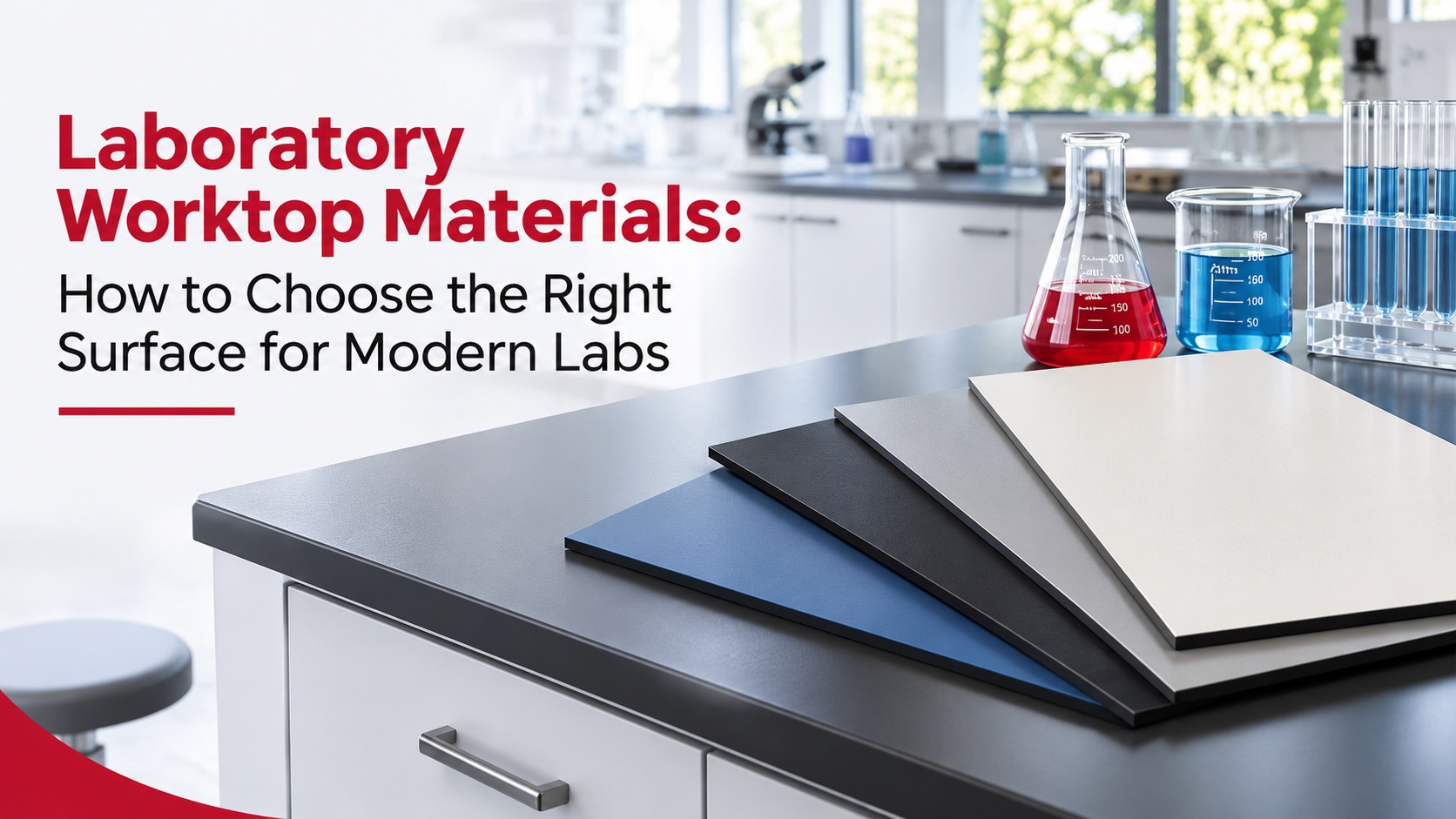
A laboratory worktop is more than just a working surface. It plays an important role in maintaining safety, hygiene, durability and efficiency in environments where chemicals, moisture, heat and frequent cleaning are part of everyday operations.
Whether it is a research laboratory, pharmaceutical facility, hospital laboratory, educational institution or industrial testing centre, selecting the right laboratory worktop material can directly affect the performance and lifespan of the workspace.
Different laboratories have different requirements. A surface suitable for a general-purpose educational lab may not be appropriate for a chemical testing facility or microbiology laboratory. Factors such as chemical resistance, heat tolerance, stain resistance, ease of cleaning and mechanical strength should therefore be considered before making a decision.
In this guide, we explore common laboratory worktop materials, their key characteristics and the factors to consider when choosing the right surface for modern laboratory environments.
Why Is Choosing the Right Laboratory Worktop Material Important?
Laboratory worktops are exposed to conditions that ordinary furniture surfaces may not be designed to handle. Depending on the type of laboratory, these surfaces may come into contact with:
-
Acids, alkalis and chemical reagents
-
Solvents and cleaning agents
-
Water, moisture and biological materials
-
Heat from laboratory equipment
-
Frequent cleaning and disinfection
-
Heavy instruments and everyday mechanical use
An unsuitable surface may become stained, damaged or difficult to maintain. This can increase maintenance requirements and affect the overall working environment.
A suitable laboratory worktop should provide a balance of chemical compatibility, durability, hygiene, ease of maintenance and long-term performance.
Common Types of Laboratory Worktop Materials
Several materials are used for laboratory countertops and work surfaces. Each has different performance characteristics, making it important to match the material to the laboratory's actual requirements.
1. Phenolic Resin Worktops
Phenolic resin worktops are manufactured using layers of paper or other reinforcement materials impregnated with phenolic resin and consolidated under heat and pressure.
They are commonly considered for laboratory furniture because of their relatively lightweight construction, durability and resistance to many chemicals.
Key characteristics:
-
Good resistance to a range of chemicals, depending on the product specification
-
Relatively lightweight compared with some alternative worktop materials
-
Suitable for various laboratory furniture applications
-
Available in different finishes and thicknesses
Best suited for: General-purpose laboratories, educational institutions and selected research environments, subject to chemical compatibility requirements.
2. Epoxy Resin Worktops
Epoxy resin is widely used in laboratories that require a robust, non-porous work surface. These worktops are typically manufactured as solid resin surfaces.
Key characteristics:
-
Good resistance to many commonly used laboratory chemicals
-
Suitable for demanding laboratory environments
-
Available in configurations that accommodate sinks and integrated work surfaces
-
Durable construction for regular laboratory use
Best suited for: Research laboratories, chemical testing facilities and environments where the specified epoxy product meets the required chemical and heat exposure conditions.
3. Stainless Steel Worktops
Stainless steel is a popular choice in environments where hygiene, cleanability and corrosion resistance are important.
Its non-porous surface can be cleaned and sanitised easily. However, its suitability depends on the grade of stainless steel and the chemicals or conditions to which it will be exposed.
Key characteristics:
-
Smooth, non-porous surface
-
Easy to clean and maintain
-
Good corrosion resistance for suitable grades and environments
-
Strong and durable construction
Best suited for: Healthcare facilities, food-testing laboratories and selected clean or controlled environments.
4. Ceramic Worktops
Ceramic worktops are valued for their hardness and resistance to high temperatures. They can be useful in laboratories where hot equipment or certain chemical exposures are part of routine operations.
Key characteristics:
Best suited for: Laboratories involving high-temperature procedures, heating equipment and specialised chemical applications.
5. Chemical-Resistant Laminate Worktops
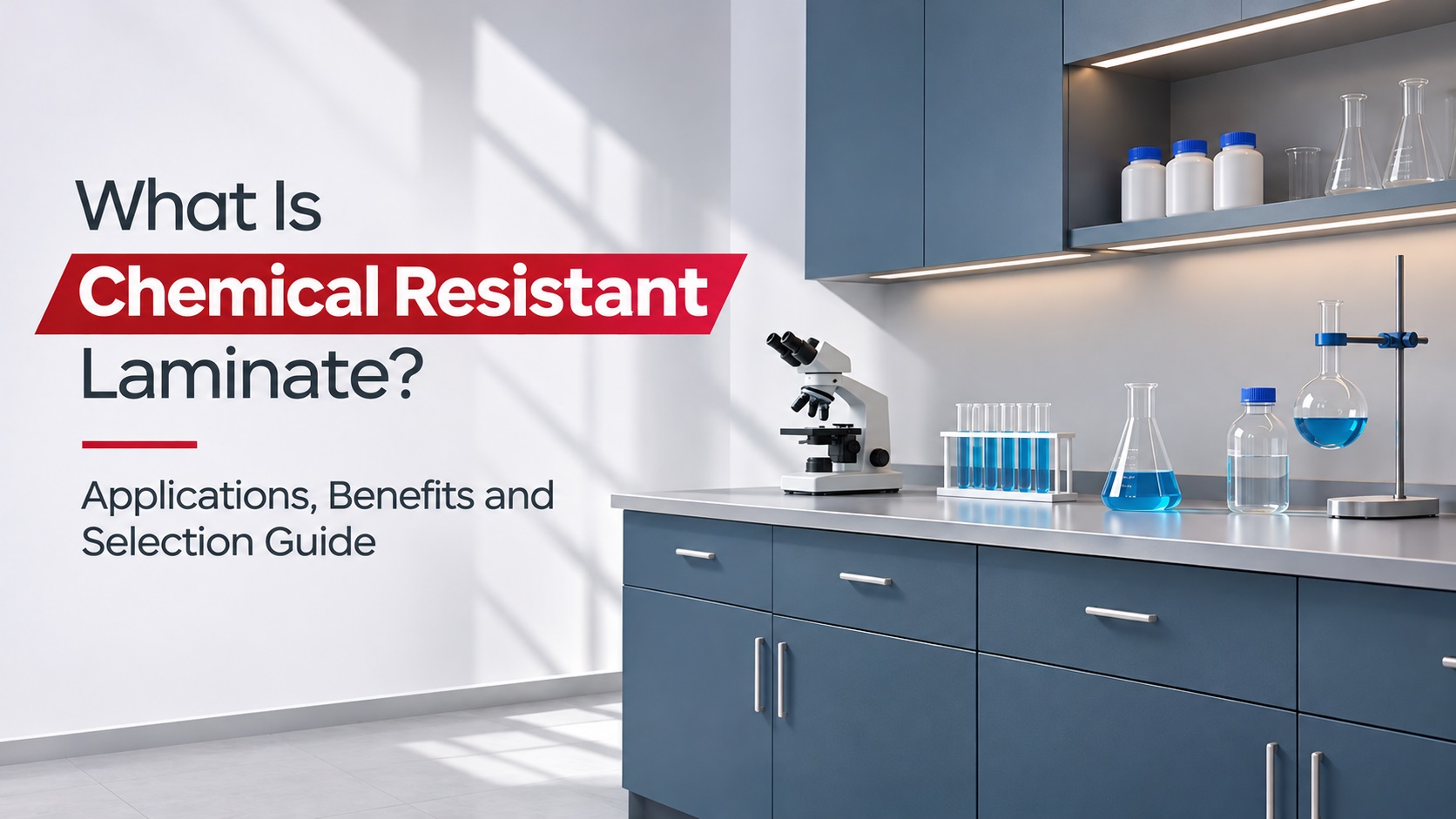
Chemical-resistant laminate worktops are designed for laboratory environments where surface durability, hygiene and resistance to chemical exposure are important.
Their performance depends on the laminate construction, resin system, manufacturing process and tested chemical-resistance characteristics.
Stylam's Lab Mate range is developed for scientific and medical environments. It uses advanced acrylic resin technology and electron beam curing, with applications across chemical, analytical and microbiological laboratories, healthcare facilities, pharmaceutical environments and educational institutions.
Key characteristics of Stylam Lab Mate:
-
Designed for chemical-resistant laboratory applications
-
Durable surface construction
-
Stain-resistant surface properties
-
Anti-bacterial surface properties
-
Designed for environments exposed to chemicals, water and contamination
Best suited for: Laboratory countertops, workstations and other scientific or medical environments where the product's technical specifications match the intended application.
Explore Stylam Lab Mate laboratory surfaces to learn more about the range.
Key Factors to Consider When Choosing Laboratory Worktop Materials
Selecting a laboratory worktop should involve more than comparing appearance or initial cost. The following factors can help you identify a suitable material.
1. Chemical Resistance
Chemical resistance is one of the most important considerations for laboratory surfaces.
Different laboratories use different combinations of acids, alkalis, solvents, disinfectants and reagents. A material that performs well against one chemical may not provide the same resistance to another.
Before selecting a worktop, consider:
-
The chemicals used in daily operations
-
Their concentrations and temperatures
-
Expected contact duration
-
The frequency of accidental spills
-
The cleaning and disinfection products used
Ask the manufacturer for chemical-resistance test data relevant to your actual chemical exposure conditions. Avoid assuming that a surface is resistant to every laboratory chemical.
2. Heat Resistance
Laboratory worktops may be exposed to hot containers, heating equipment and elevated temperatures during testing procedures.
If heat exposure is expected, check the manufacturer's stated temperature limits and test conditions. Also consider whether the surface will experience direct contact with hot equipment or only occasional indirect exposure.
For laboratories involving frequent high-temperature work, materials such as suitable epoxy resin or ceramic may be worth evaluating.
3. Durability and Mechanical Strength
Laboratory worktops must support instruments, equipment, glassware and regular daily activity.
A durable surface can help reduce damage caused by routine use. Consider the worktop's resistance to scratches, impact, abrasion and wear, along with its thickness and support requirements.
The overall installation also matters. Proper support, edge finishing and joint construction contribute to long-term performance.
4. Hygiene and Ease of Cleaning
Cleanability is essential in laboratories where contamination control is important.
Look for surfaces that are easy to wipe, maintain and clean using the laboratory's approved cleaning agents. Non-porous or appropriately sealed surfaces can help reduce the accumulation of dirt and contaminants.
For healthcare, pharmaceutical and microbiological environments, also check whether the surface's hygiene-related claims are supported by relevant product information or test documentation.
5. Moisture and Stain Resistance
Water, cleaning solutions and laboratory liquids can come into contact with worktops throughout the day.
A suitable surface should be selected for the expected moisture exposure and staining risks. Pay attention to edges, joints, sink cut-outs and other areas where liquid may enter the installation.
6. Maintenance Requirements
Maintenance affects the total cost of owning a laboratory worktop.
Consider how frequently the material needs specialised cleaning, whether repairs are practical and which cleaning products are permitted. A surface that is easy to maintain can help simplify everyday laboratory operations.
7. Installation and Customisation
The worktop should fit the laboratory layout and its intended activities.
Consider:
-
Required panel dimensions and thickness
-
Cut-outs for sinks and laboratory equipment
-
Edge profiles and joint details
-
Support structure and load requirements
-
Compatibility with cabinets and laboratory furniture
-
Installation and processing recommendations
Always follow the manufacturer's installation guidelines to maintain the intended surface performance.
Laboratory Worktop Materials: Comparison at a Glance
| Material |
Key characteristics |
Common applications |
| Phenolic Resin |
Lightweight construction and resistance to selected chemicals |
General-purpose and educational labs |
| Epoxy Resin |
Durable solid surface with resistance to many laboratory chemicals |
Research and chemical laboratories |
| Stainless Steel |
Hygienic, non-porous and easy to clean |
Healthcare and selected controlled environments |
| Ceramic |
Hard surface with high heat resistance |
High-temperature and specialised laboratory work |
| Chemical-Resistant Laminate |
Designed for laboratory use, with product-dependent chemical and stain resistance |
Scientific, medical and educational laboratories |
Important: This comparison is a general guide. Actual performance varies by manufacturer, product grade, chemical exposure, temperature and installation. Always review the technical data for the specific material before specifying it.
Which Laboratory Worktop Material Is Right for Your Laboratory?
The right material depends on the activities carried out in the laboratory.
Chemical and Analytical Laboratories
These environments may involve regular exposure to acids, alkalis, solvents and reagents. Prioritise verified chemical-resistance data and consider chemical-resistant laminate or epoxy resin products that are suitable for the substances being used.
Pharmaceutical Laboratories
Pharmaceutical facilities often require surfaces that support routine cleaning and controlled working practices. Consider cleanability, stain resistance, chemical compatibility and the facility's hygiene requirements.
Microbiology and Healthcare Laboratories
These laboratories may require surfaces that can withstand frequent cleaning and disinfection. Evaluate the surface's cleanability, moisture resistance and compatibility with the cleaning agents used.
Educational and Research Laboratories
Educational and research environments may experience varied day-to-day use, including equipment handling, experiments and occasional spills. Durability, maintenance requirements and suitability for the chemicals used should guide the selection.
Why Consider Stylam Lab Mate for Laboratory Worktops?
Laboratory environments require surfaces developed for more demanding conditions than ordinary interior applications.
Stylam's Lab Mate range is designed for scientific and medical environments, combining advanced acrylic resin technology with electron beam curing. The range is developed for applications where chemical resistance, durability, stain resistance and hygiene-related surface properties are important.
Its stated applications include:
-
Chemical and analytical laboratories
-
Microbiological laboratories
-
Healthcare facilities
-
Pharmaceutical environments
-
Educational laboratories
-
University and industrial research facilities
Stylam Lab Mate is available in White, Grey and Black finishes, offering options for different laboratory interiors.
If you are planning a new laboratory or upgrading existing workstations, explore the Stylam Lab Mate range and consult the technical information for application suitability.
Frequently Asked Questions
1. What is the best material for laboratory worktops?
There is no single best material for every laboratory. Epoxy resin, phenolic resin, stainless steel, ceramic and chemical-resistant laminate each offer different characteristics. The right choice depends on chemical exposure, heat requirements, hygiene needs, maintenance and budget.
2. Which laboratory worktop material is best for chemical resistance?
Epoxy resin and specially developed chemical-resistant laminate surfaces are commonly considered for chemical laboratory applications. However, resistance varies by product and chemical. Always check test data for the specific chemicals, concentrations and exposure conditions involved.
3. Are laminate worktops suitable for laboratories?
Certain laminates are specifically developed for laboratory applications. They can offer a combination of durability, stain resistance, cleanability and chemical resistance. Standard decorative laminates should not automatically be treated as suitable for laboratory use.
4. What should I check before purchasing a laboratory countertop?
Check chemical-resistance data, heat tolerance, mechanical strength, cleanability, moisture resistance, thickness, installation requirements and maintenance recommendations. Ask the manufacturer for technical documentation relevant to your application.
5. How do I maintain laboratory worktops?
Follow the manufacturer's cleaning and maintenance instructions. Use only compatible cleaning agents, clean spills promptly and avoid abrasive materials or chemicals that may damage the surface. Inspect joints, edges and damaged areas regularly.
6. What is Stylam Lab Mate used for?
Stylam Lab Mate is a laboratory surface range designed for scientific and medical environments. Its stated applications include chemical, analytical and microbiological laboratories, healthcare, pharmaceutical and educational facilities.
Conclusion
Choosing the right laboratory worktop material is an important decision that affects the durability, hygiene, safety and functionality of a laboratory.
Before making a selection, assess the chemicals used, heat exposure, cleaning requirements, expected workload and installation conditions. Compare materials based on verified technical information rather than appearance or general claims alone.
For laboratories looking for a purpose-developed surface, Stylam Lab Mate offers a range designed for scientific and medical environments, with a focus on chemical resistance, durability and stain-resistant surface properties.
Explore Stylam Lab Mate or contact Stylam to discuss laboratory surface requirements for your project.